

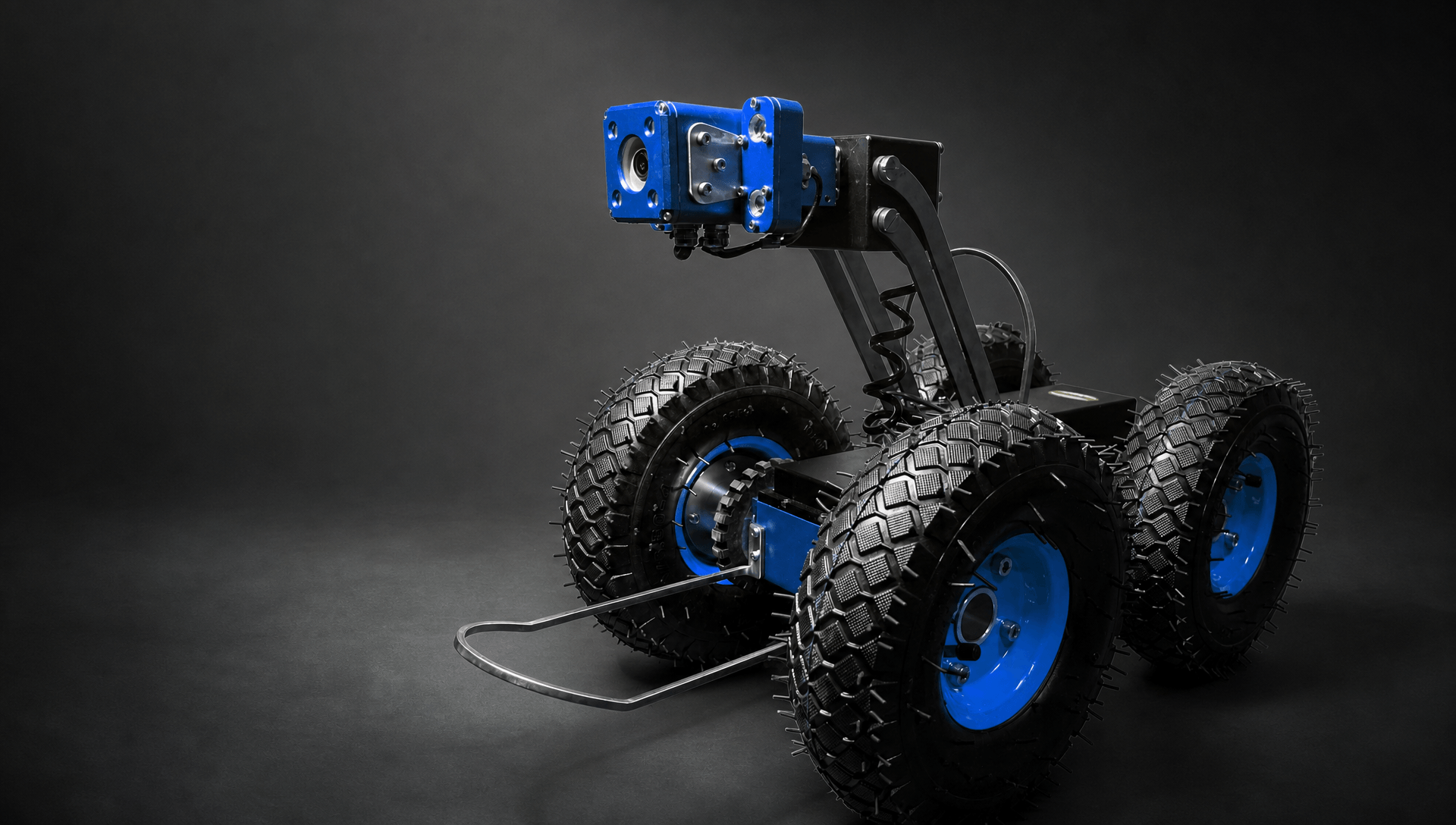
The direct answer: long trunk mains are not inspected in a single cable pull. They are surveyed as a series of metered runs between access points, planned so the footage joins into one continuous condition record. The planning — not the robot — is what separates a seamless trunk survey from a relay-point mess.
Trunk mains and culverts are different from lateral sewers. They sit deeper, run further, and carry flows that cannot be stopped on a whim. Standard inspection kits work to a cable distance — the K-Series runs 100–120 m per deployment depending on model — so a kilometre of trunk means multiple deployments, each with its own access point, traffic control and retrieval plan.
Why trunk mains break the routine
- Cable reach. One deployment covers a fixed distance; the rest of the line needs another access point.
- Deep, low-access chambers. Trunk access points are usually confined spaces that need permits, gas monitoring and a retrieval plan.
- Traffic and flow control. Surface work around busy roads and live flows adds coordination time to every setup.
- Fragmentary records. If consecutive runs are not aligned, the video has gaps and condition is judged in slices rather than end to end.
Planning the run
Before mobilising, the survey team walks the route and marks every usable access point — manholes, chambers, vent stacks. The line is then segmented so each deployment ends at a known chamber, with a small overlap on the footage so the record is continuous. Access, traffic windows and flow levels are checked against the calendar, and silted sections are flagged for cleaning before the survey so the invert is visible.
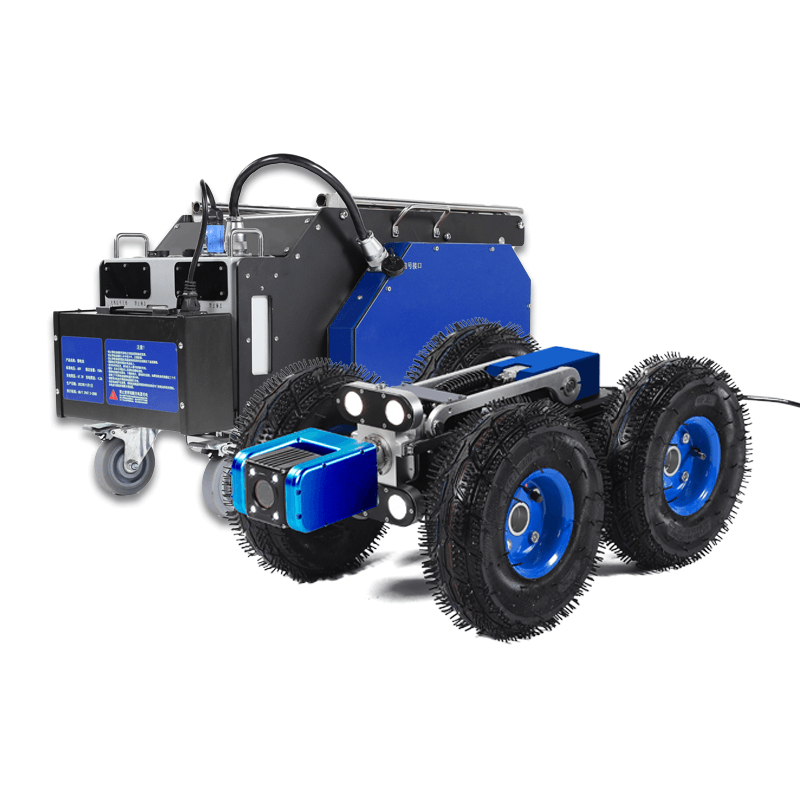
Stage by stage: one deployment
- Access. The robot is lowered into the chamber on its cable, with the control unit set up at the surface.
- Drive. The operator drives the crawler toward the next access point, recording continuous footage.
- Meter. The electronic encoder logs distance on every frame, so each defect is pinned to a position within the stage.
- Retrieve. The robot is recovered and moved to the next chamber — or the line is continued from the far end.
What makes the record continuous
Three things turn separate runs into one useful record. First, metered distance: every frame carries a position, so footage from consecutive stages lines up. Second, overlap: each run starts and ends a few metres inside the previous stage, leaving no gap. Third, a single report: at the end of the job, screenshots, defect lists and risk ratings are compiled into one document that represents the whole trunk — not a stack of per-run files.
Choosing the robot for the line
Model choice for a trunk survey comes down to diameter and reach:
- K22 (DN300–2000, 120 m per run) — the standard choice for large mains.
- K22-B (DN190–2000) — where access chambers are tighter but the main is still large.
- K22-C (DN150–2000) — a compact footprint for small-bore sections and tight entries.
- K20 (DN300–2000, 100 m cable, dual 5MP cameras) — where maximum image detail matters on large-diameter runs.
Whichever model is on the line, the workflow is the same: plan the stages, run them metered, stitch the record.
Field notes from long runs
- Survey in the dry season where possible — lower flows mean a clearer invert and fewer cleaning runs.
- Clean silted sections before the survey, not during it; cameras show condition, not surprises.
- Date and label every screenshot on site — the report is only as traceable as its notes.
- Carry a spare set of track pads on long jobs; abrasive inverts wear them down.
"A trunk survey is not one run. It is one plan, executed in stages, reported as a single record."
FAQ
How far can one deployment inspect? The K-Series runs 100–120 m per deployment depending on model — cable length and pipe conditions set the stage length.
Do the stages leave gaps in the record? No. Consecutive runs overlap slightly and are aligned by the electronic encoder, so the video is continuous end to end.
Can trunk mains be surveyed without entering the line? In suitable pipe geometries, yes — crews operate from the surface at each access point, which can reduce or avoid confined-space entry compared with manual inspection.
A long trunk is surveyed the way it is maintained — in planned stages. Metered, overlapped and reported as one record, the full run becomes a condition map the owner can plan on.