

Stormwater & Flood Relief
Pre-flood condition surveys of stormwater and flood-relief systems.
Condition mapping of stormwater and flood-relief networks before the wet season — sediment, joint gaps and structural defects prioritised so maintenance happens before the flood, not after.
Flood Response Leaves No Planning Window.
Sediment hides condition, and reactive response leaves no time to plan.
Sediment Hides Condition
Inverts silt up between storms, hiding joint gaps, cracks and structural movement until the next big rain exposes them — at the worst possible time.
Reactive Response
Flood events force crews into emergency mode. Lines get cleaned and patched in haste, with no condition record to plan against.
Seasonal Bottlenecks
Dry-season maintenance windows are short, and every network competes for the same crews and budget.
Hidden Blockages
Collapsed sections and root intrusion sit below grade, invisible until water finds its way out — on a road, or into a basement.
The direct answer.
Why inspect stormwater before the wet season? Because the condition is readable in the dry season, and the maintenance list is still usable. PipeSolv's K-Series maps sediment depth, joint condition and structural defects in stormwater and flood-relief networks with metered positions — giving drainage teams a prioritised list of cleaning and repair targets while there is still time to schedule them.
Sediment hides the real condition
Between storms, inverts silt up and the pipe wall disappears from view. What looks like a fine pipe is often hiding joint gaps, cracks and early deformation. A dry-season survey reads the pipe below the sediment line and records how much build-up is actually there — the two things that decide whether a line will cope with the next heavy rain.
A prioritised list, not a panic
Flood response is expensive because it is reactive. A pre-flood survey flips the sequence: condition is known in advance, targets are prioritised by risk, and maintenance is scheduled in the window that exists before the rain — not in the middle of the event.
Surveyed Before the Rain.
Dry-season condition mapping that turns flood response into planned maintenance.
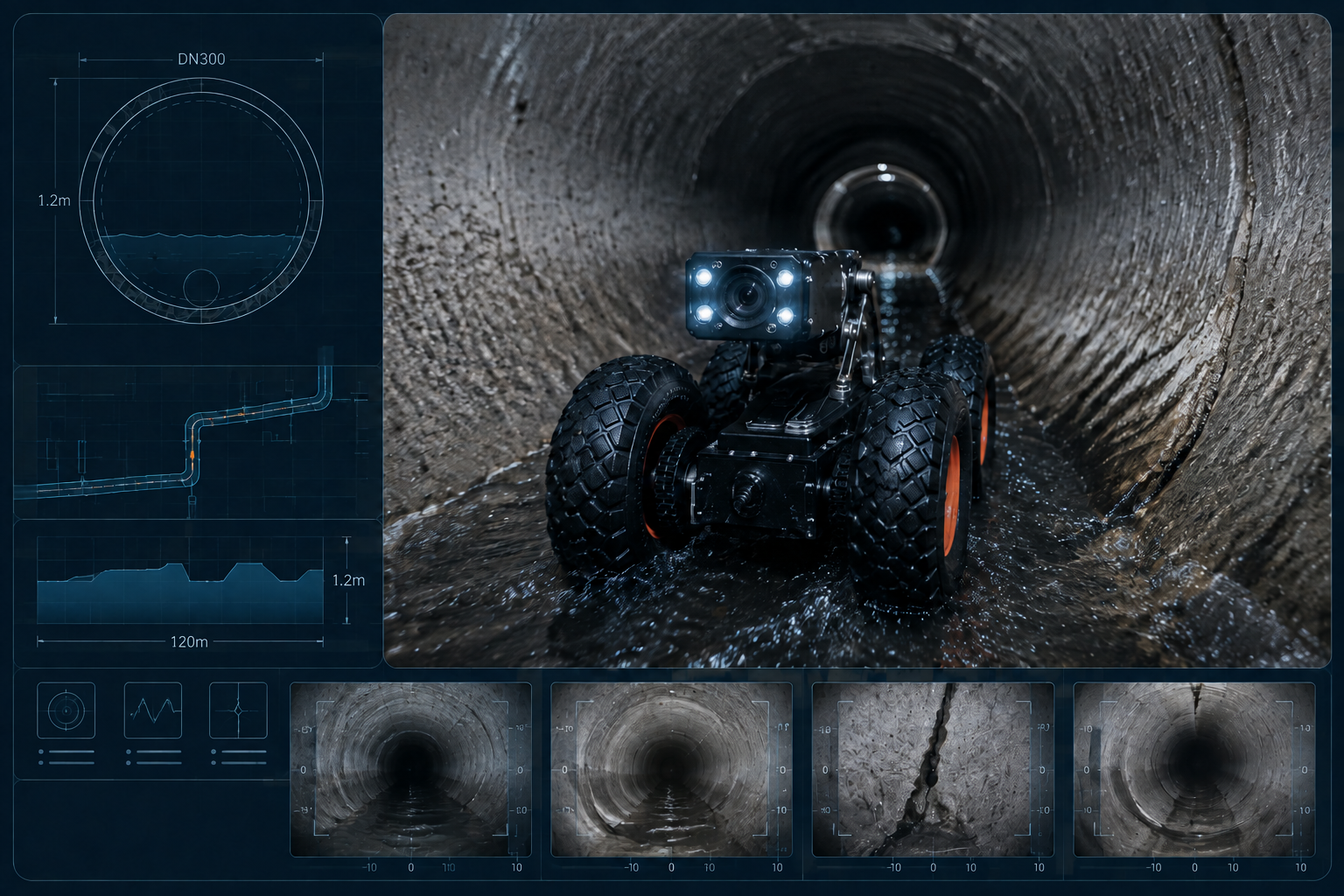
Pre-Flood Condition Mapping
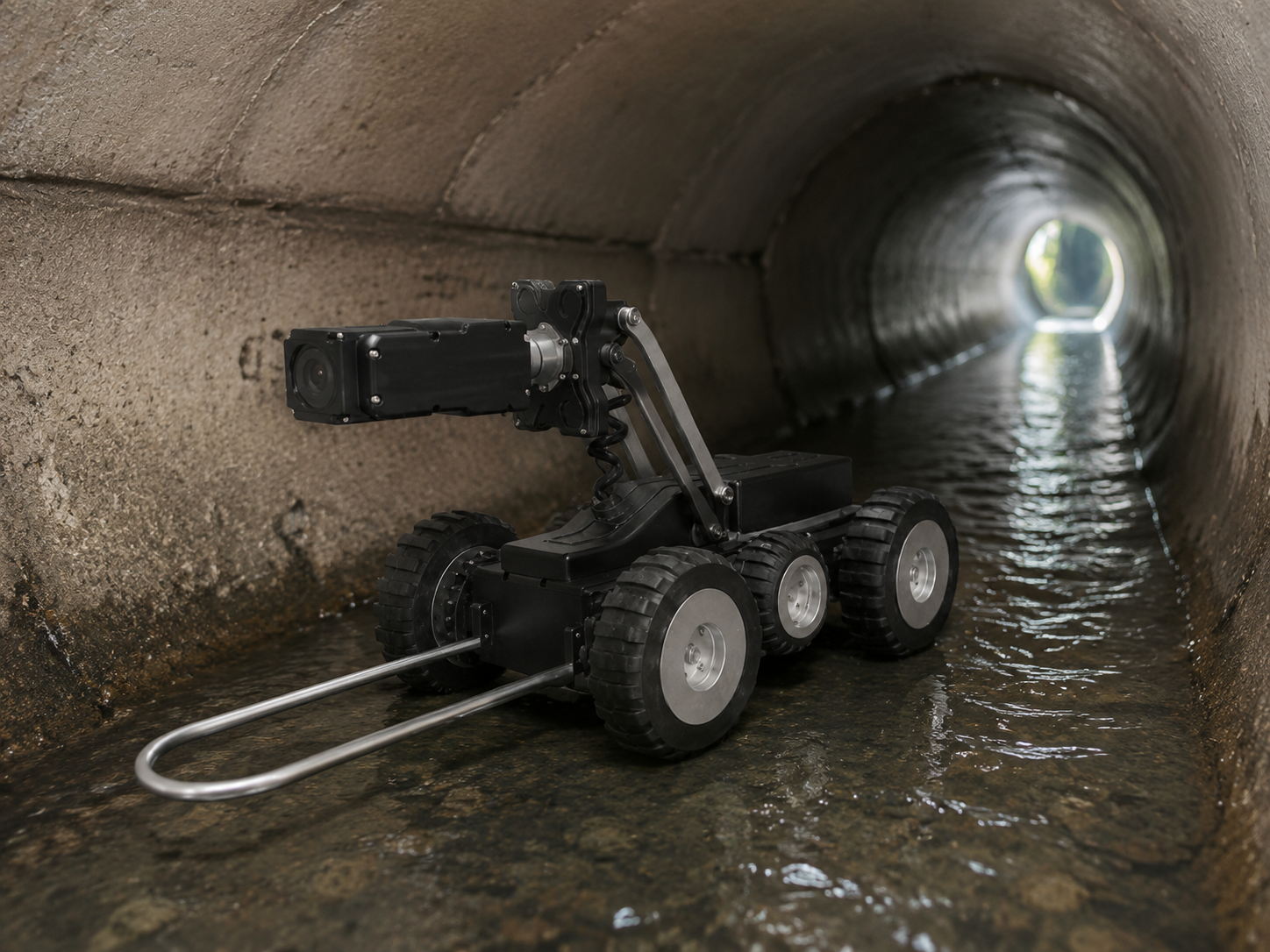
Sediment & Joint Survey
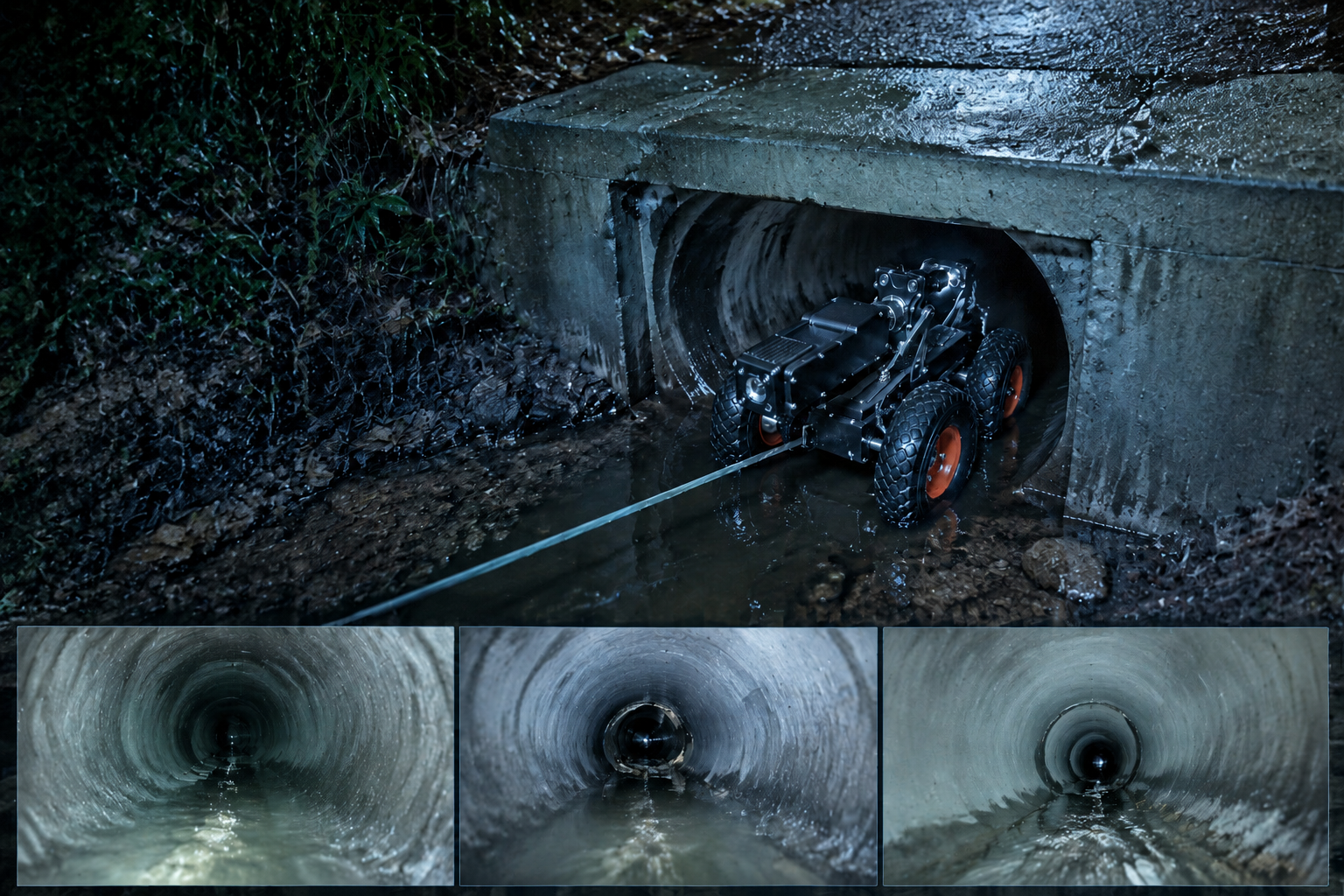
Survey Before the Wet Season.

Stormwater and flood-relief networks are inspected in the dry season, when the invert is accessible and the condition is readable. The K-Series drives the line while cameras record sediment depth, joint condition and structural defects with metered positions. The result is a prioritised list of cleaning and repair targets — produced while there is still time to schedule the work.
Built for the Drainage Network.
Pre-flood condition maps that prioritise maintenance before the rain arrives.
Pre-Flood Planning
Surveys in the dry season deliver a maintenance list before the wet season arrives.
Sediment Visibility
Metered footage records invert build-up and the true condition hidden beneath it.
Metered Priorities
Every defect is pinned to a position, so cleaning and repair crews go straight to the target.
No Entry
Crews stay at street level; nobody enters the drainage network.
Repeatable Records
Year-on-year surveys show how sediment and structure change — and whether maintenance worked.
From Inlet to Priority List in Four Steps.
A proven process timed for the dry-season window.
Plan
Schedule the survey in the dry season and confirm the network sections with the drainage authority.
Deploy
Enter the line at the manhole or inlet and connect the control system at the surface.
Inspect
Drive the run while cameras record sediment depth, joints and structural condition with metered positions.
Document
Produce a prioritised maintenance list — cleaning, repair or monitoring — before the wet season.
Machines Built for This Work.
The K-Series models recommended for this application — pick your platform to see the full specification.


Explore Other Industries.
Utility Ducts & Cable Tunnels
Condition mapping of cable ducts and utility tunnels — remotely.
Long-Run Trunks & Culverts
Single-pass inspection of long trunk mains, culverts & tunnels.
Industrial Process Piping
In-service surveys of plant piping — no shutdown, no confined-space entry.