

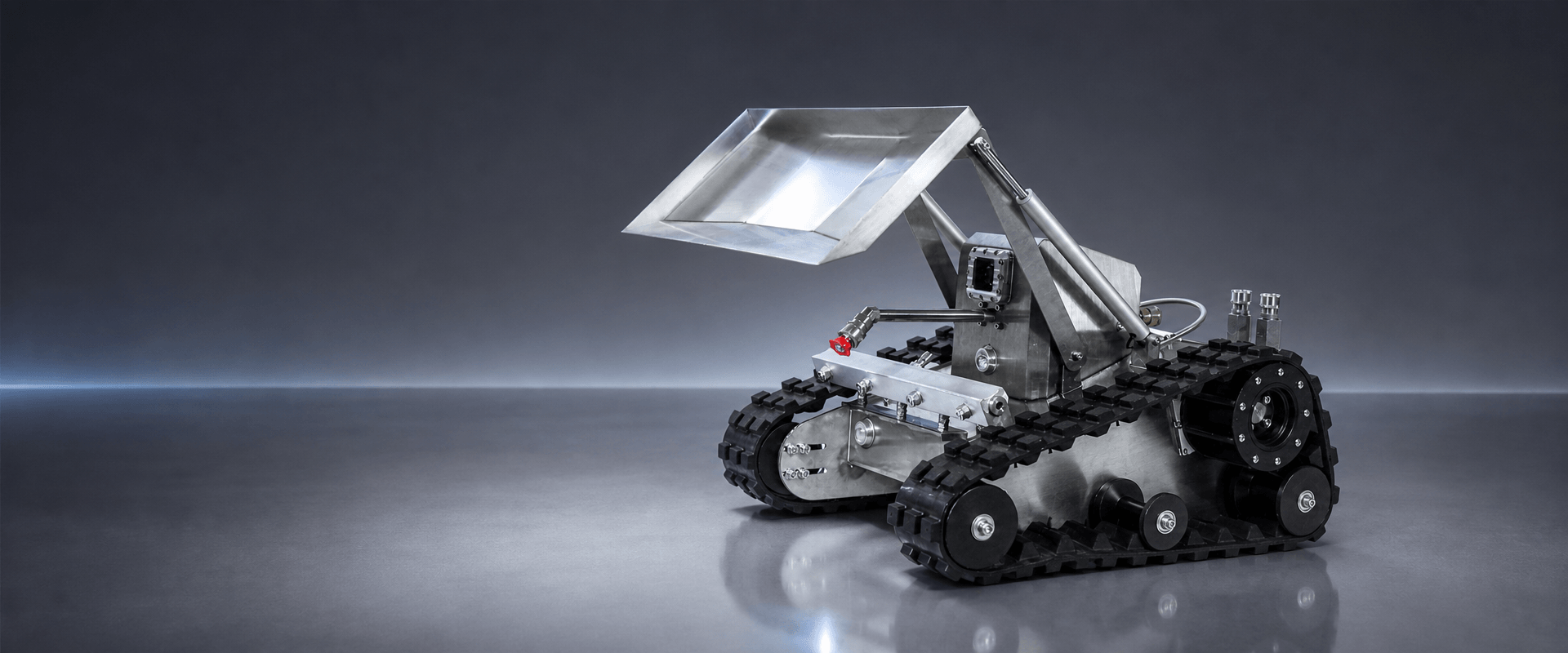
The direct answer: before signing off on an inspection robot, check three things — field range, camera clarity and deployment time. They decide how many access points each job needs, whether defects are actually gradeable in the footage, and whether crews treat the machine as a daily tool or a project. Headline specs matter less than how these three behave on your real lines.
Field range: the distance each deployment covers
Range sets the economics of every job. A crawler that covers 100–120 m per deployment needs fewer access points and fewer setups per kilometre than one that manages a quarter of that. When you are comparing models, ask for the practical working distance — the distance you can rely on through real pipe conditions, not the theoretical maximum on a clean test bench.
On the K-Series, that practical number is 100 m on the K20 and up to 120 m on the K22 family. It is worth matching the number to your network: short lateral runs do not need a long cable, but trunk mains will pay for reach on every kilometre.
Camera clarity: what the footage actually resolves
Resolution is the headline number, but clarity is the sum of resolution, lighting, optics and stability. A 2MP 1080P camera with good LED fill lights reads a dark, deep-buried line far better than a higher-resolution camera with weak lighting and motion blur.
Ask three questions on site: can you read a joint detail at full zoom? Does the light cover the full circumference or just the centre? Is the image stable when the crawler is climbing an offset? The answers decide whether your reports carry defects that are actually gradeable.
Deployment time: from truck to footage
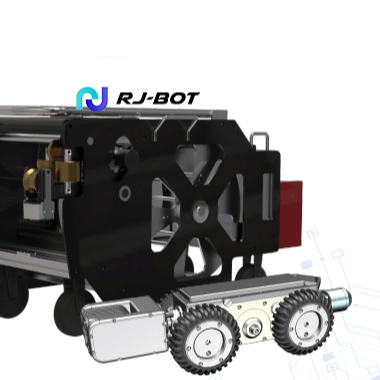
Time is the hidden cost of inspection. Every hour spent setting up, cable handling and troubleshooting is an hour not inspecting. Modern crawlers are designed around a single operator: wireless tablet control, a powered cable reel and one-click report generation. The K-Series is built this way — one operator can be inspecting within minutes of arrival, and the report is compiled on the tablet as the run finishes.
Waterproofing and durability: the unglamorous spec
Sewers are wet, abrasive and corrosive. IP68-rated sealing means the crawler can work submerged in high-groundwater and waterlogged lines, and sealed cameras survive the mud, grit and chemicals that define real inverts. Check the rating against the environment you actually work in — an inspection robot for stormwater will see more water than most.
A commissioning checklist
Use this short list when evaluating any inspection robot:
| Check | Why it matters | How to confirm |
|---|---|---|
| Working range per deployment | Sets the number of access points per job | Test through real pipe conditions |
| Camera resolution & clarity | Decides whether defects are gradeable | Zoom a joint detail in dark conditions |
| Lighting coverage | Hidden defects live in unlit walls | Check full-circumference illumination |
| Deployment time | Drives cost per run | Time one operator, truck to footage |
| IP rating | Determines survival in wet lines | Compare with your wettest environment |
| Cable reel & encoder | Metering makes the report objective | Verify counting against a known distance |
| Reporting workflow | Turns runs into deliverables | Walk one run through to the report |
| Spares & wearing parts | Keeps the machine in the field | Check track pads, wheels, lenses |
What matters less than marketing suggests
A long list of accessories, a flashier control interface or a heavier chassis does not make a better survey. What matters is that the machine you commission is the machine your crews can run daily — and that its record survives a network owner's review years later. If the footage is gradeable, the report is traceable and the crew can deploy it without drama, the spec sheet has done its job.
FAQ
Do I need the highest camera resolution available? Not always. Match resolution to your defect grading needs and your client's expectations — 2MP 1080P is the industry baseline, and higher resolution helps where fine detail drives the decision.
What does commissioning involve on delivery? Typically a physical inspection of the unit, a test run through a section of real pipe, a check of the cable reel and encoder, and a walkthrough of the reporting workflow with the crew.
How long does a new crew take to become productive? With tablet-controlled robots built for one operator, most crews run a first survey within the first day — the learning curve is in reading the footage, not operating the machine.
Range, camera and deployment time decide whether a robot earns its place in the truck. Test those three on your own lines, and the rest of the spec sheet takes care of itself.