

Utility Ducts & Cable Tunnels
Condition mapping of cable ducts and utility tunnels — remotely.
Robotic surveys of cable ducts and utility tunnels — clearance checks, joint and structure mapping, and defect observation in confined infrastructure, without disturbing the services inside.
The Network You Never See.
Tight access, invisible damage and disruption risk keep these assets off the record.
Cramped Access
Cable ducts and utility tunnels are tight, low and long. Manual inspection means crawling, confined-space permits and limited visibility.
Invisible Cable Damage
Cable sheathing, joint boxes and duct linings degrade out of sight. Damage surfaces only when a service fails.
Disruption Risk
Opening ducts and tunnels for inspection disturbs the very services that run through them — power, telecom, water.
No Condition Baseline
Without a survey history, asset teams can't tell routine ageing from a developing fault.
The direct answer.
How are cable ducts and utility tunnels inspected without disturbing the services inside? With a compact tracked robot that enters at an access chamber and drives through remotely. PipeSolv's K-Series records continuous HD footage of the lining, joints and internal structure — clearance checks and condition mapping completed without opening the network or touching the services that run through it.
Clearance, joints and structure — on record
Ducts and tunnels fail in ways that are invisible from outside: lining wear, joint displacement, debris and corrosion that narrows clearances. The survey captures all of it with metered positions, so asset teams know exactly where a pinch point or a damaged section sits — before a cable pull or a planned works programme finds it the hard way.
A baseline you can measure against
The first survey builds the baseline; repeat surveys show how condition changes over time. That history is what separates routine ageing from a developing fault — and it turns maintenance decisions for hidden infrastructure into evidence-based ones.
Reach Where Crews Can't Go.
Cable ducts and utility tunnels surveyed remotely — clearance, joints and structure on record, services untouched.
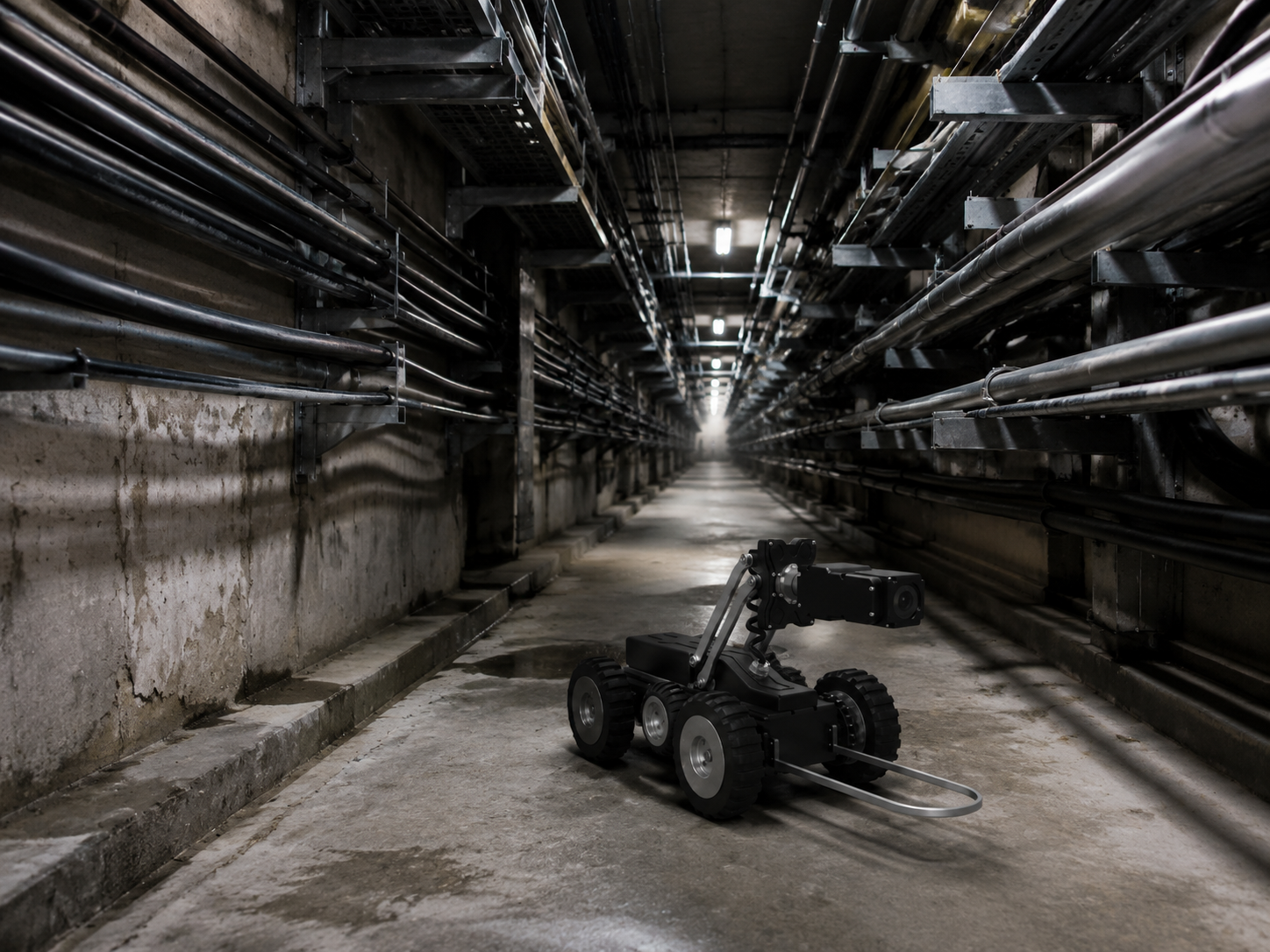
Cramped Ducts, Robotic Reach
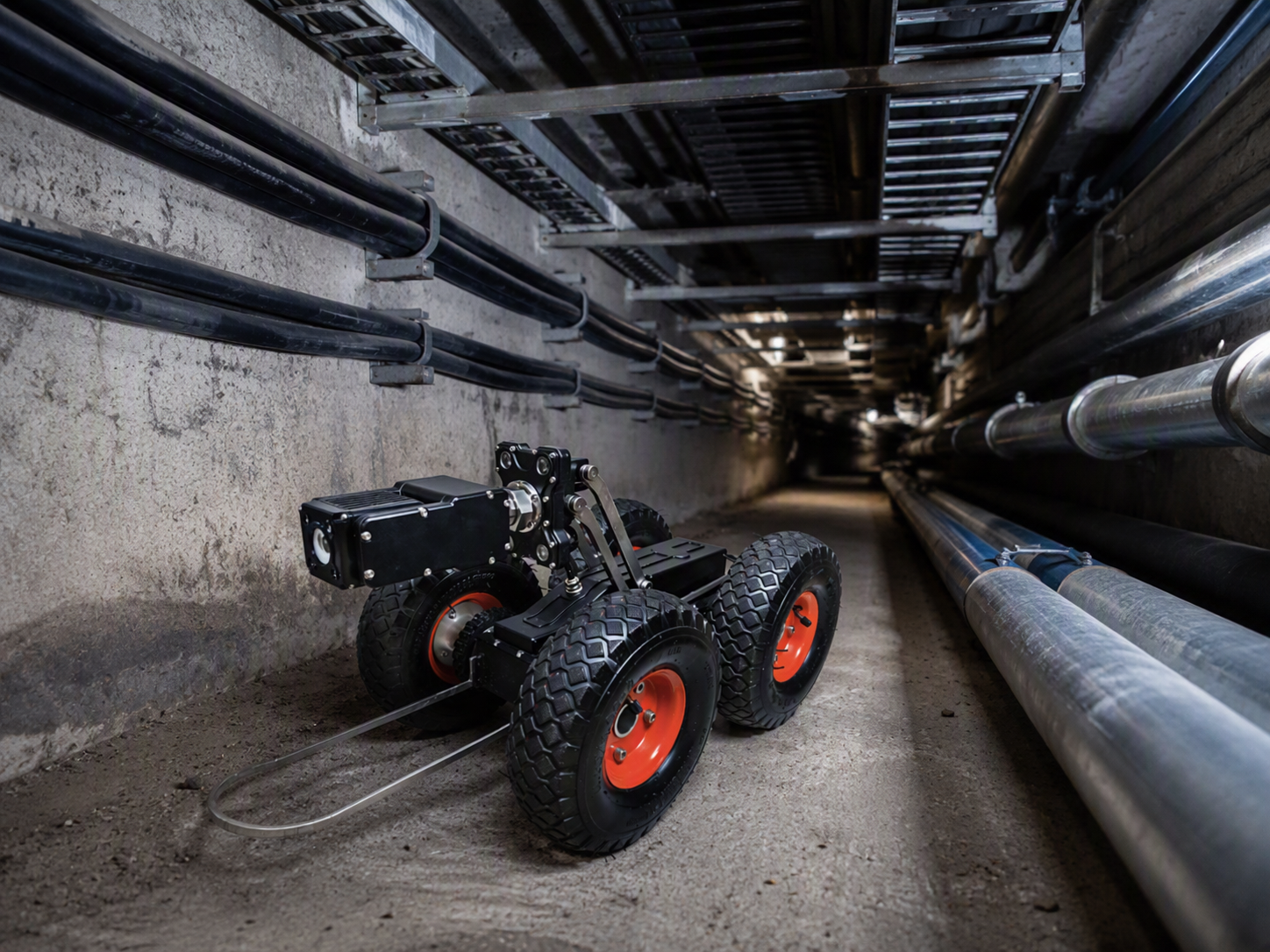
Cable Tunnel Condition Mapping
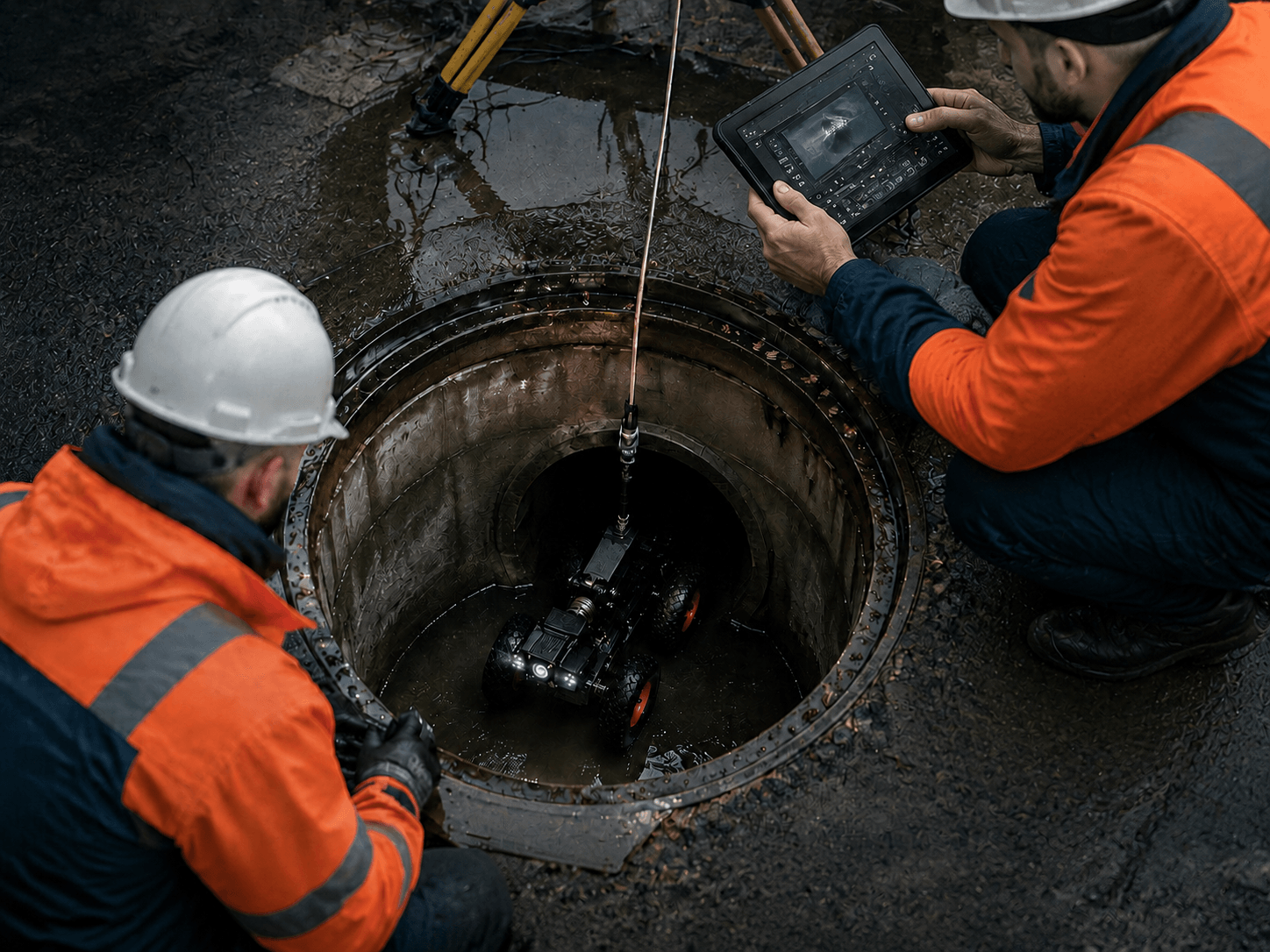
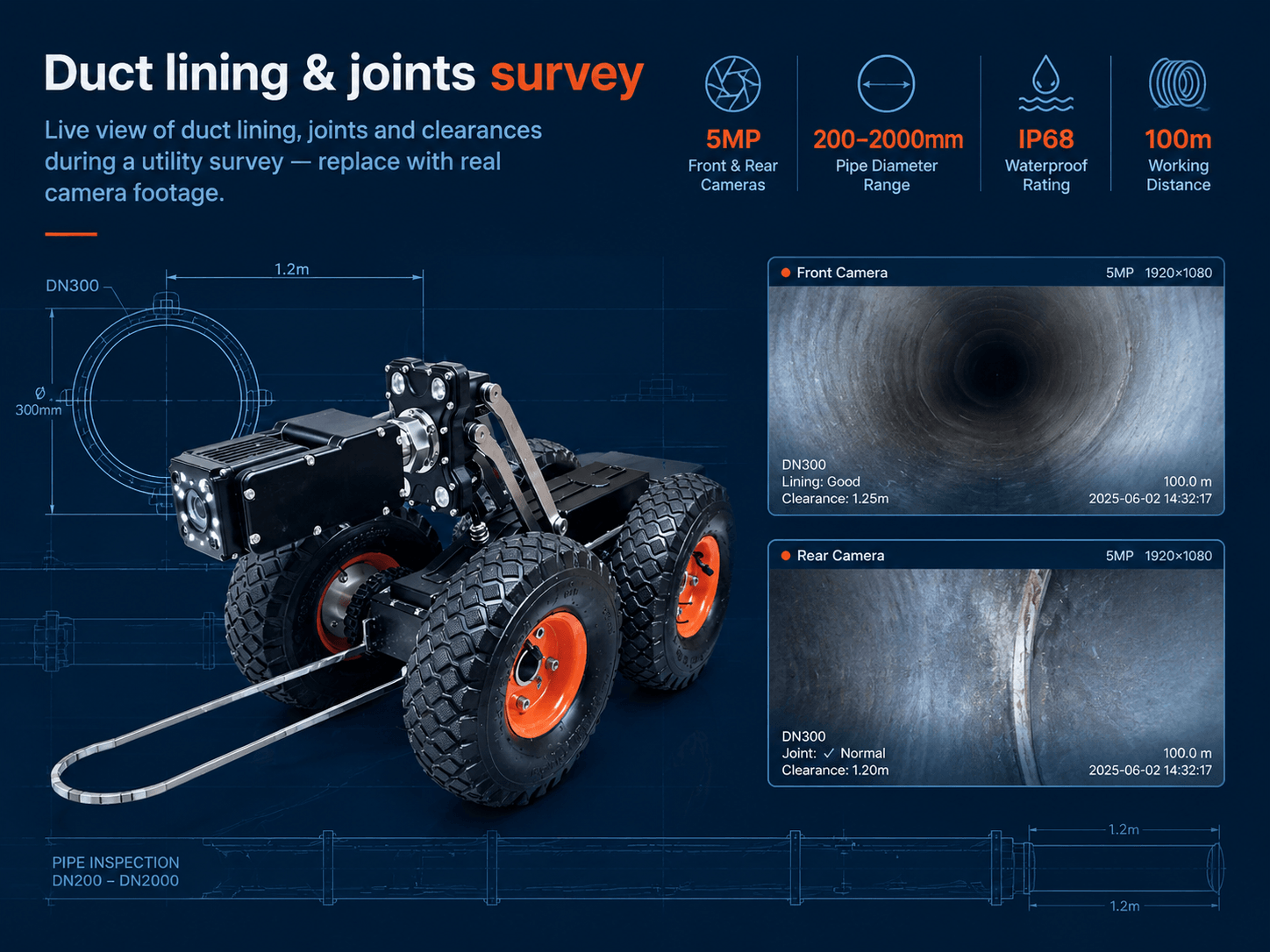
Robotic Reach Where Crews Can't Go.
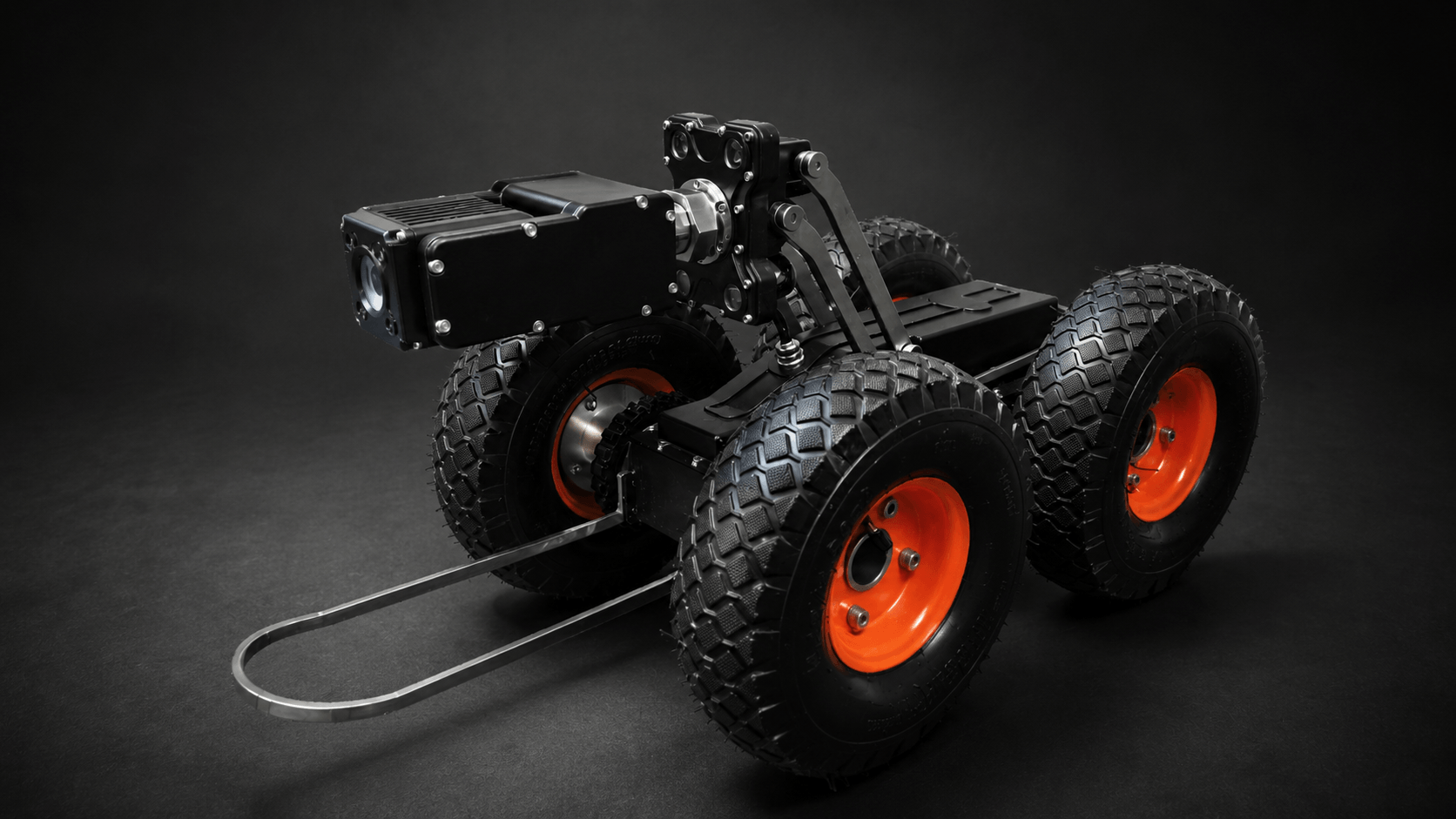
The K-Series crawler enters the duct or tunnel at an access chamber and is driven through remotely, capturing continuous HD footage of the lining, joints and internal structure. Operators stay at the access point — no crawling, no confined-space entry. The metered record gives asset teams a clear picture of clearance, structure and condition without disturbing the services inside.
Built for Confined Infrastructure.
Remote surveys that document clearance and condition without disturbing the services inside.
Remote Access
The crawler reaches sections crews can't — without crawling or confined-space entry.
No Disturbance
Services keep running while the survey is recorded; nothing is opened or moved inside the duct.
Clearance Checks
Footage confirms clearances, obstructions and pinch points before cable or pipe work begins.
Full Coverage
Twin cameras record lining, joints and structure continuously with metered positions.
Documented Baseline
A dated condition record that separates routine ageing from developing faults.
From Access Chamber to Record in Four Steps.
A proven process for surveys inside live utility infrastructure.
Plan
Confirm the duct or tunnel section and the services running inside with the asset owner.
Deploy
Enter the infrastructure at an access chamber and connect the control system at the surface.
Inspect
Drive the run while cameras record clearance, lining, joints and structure with metered positions.
Document
Export the structured condition record for planning, rehabilitation or pre-works clearance.
Machines Built for This Work.
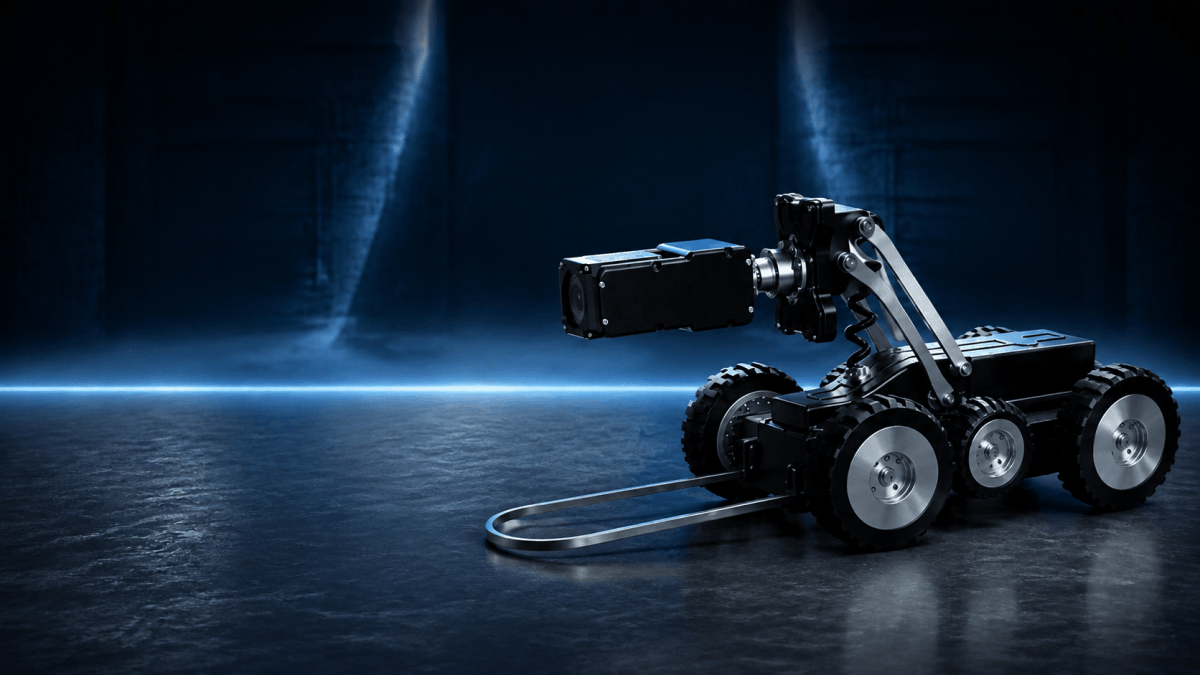
The K-Series models recommended for this application — pick your platform to see the full specification.
Explore Other Industries.
Stormwater & Flood Relief
Pre-flood condition surveys of stormwater and flood-relief systems.
Long-Run Trunks & Culverts
Single-pass inspection of long trunk mains, culverts & tunnels.
Industrial Process Piping
In-service surveys of plant piping — no shutdown, no confined-space entry.