

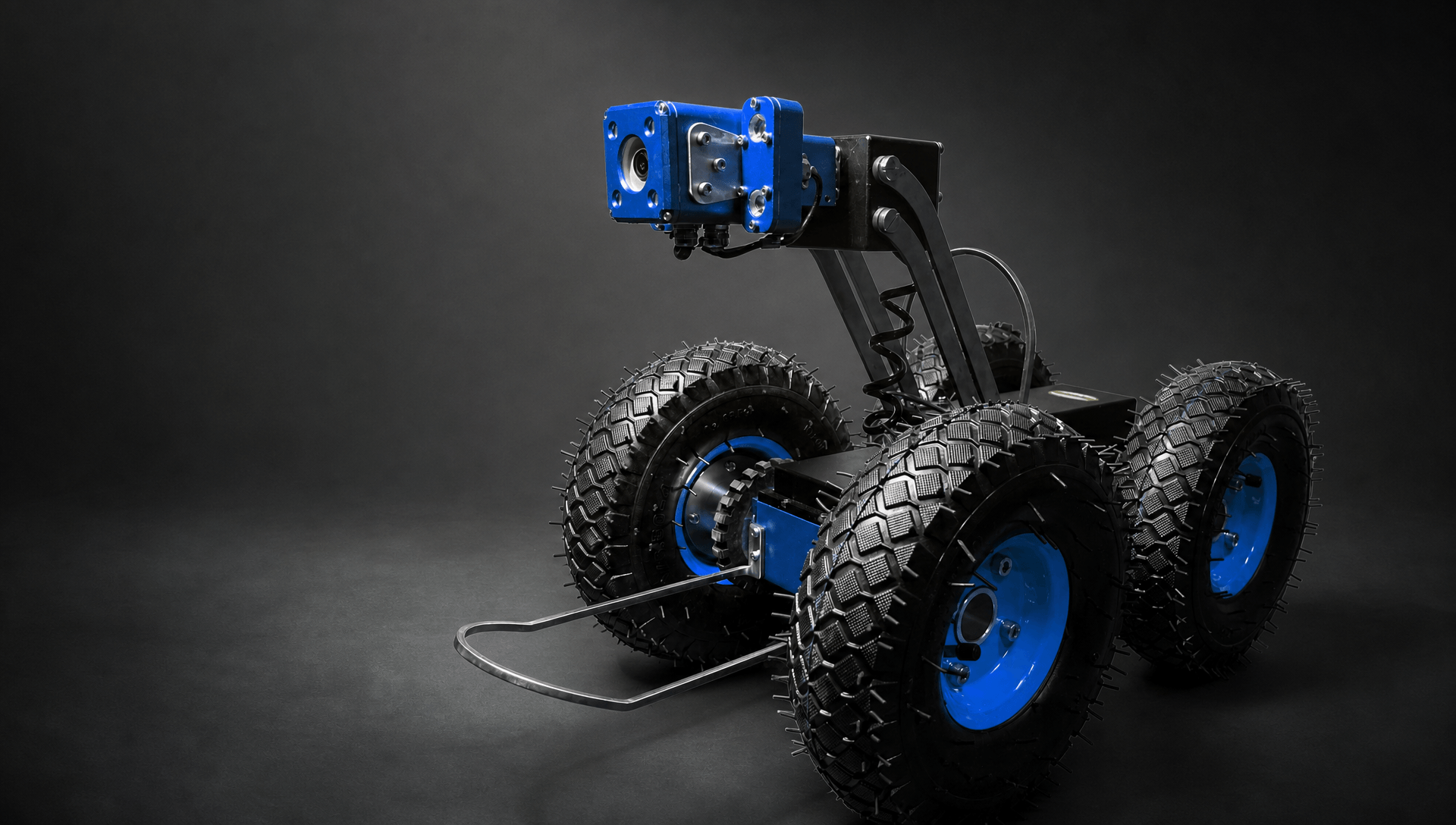
The direct answer: in-service robotic surveys inspect potable and utility mains while the line stays in service — no shutdown, no bypass and no service interruption. A tracked crawler enters the line at an access point and records the internal wall continuously, giving asset teams condition data on corrosion, lining and sediment that previously required taking the main out of supply.
For utilities, the value is not just the footage. It is the ability to see inside the main without the operational cost of a shutdown. This article covers how in-service surveys work, what they capture, where they fit — and the practical limits that should be understood before planning one.
The old equation: shutdown, bypass or both
Conventional internal inspection of a water main usually meant one of three things: shutting the line down, installing a bypass, or digging trial holes to inspect externally. All three are expensive, and shutdowns interrupt supply to customers who notice immediately. As a result, most mains are inspected on failure, not on condition.
How in-service robotic surveys work
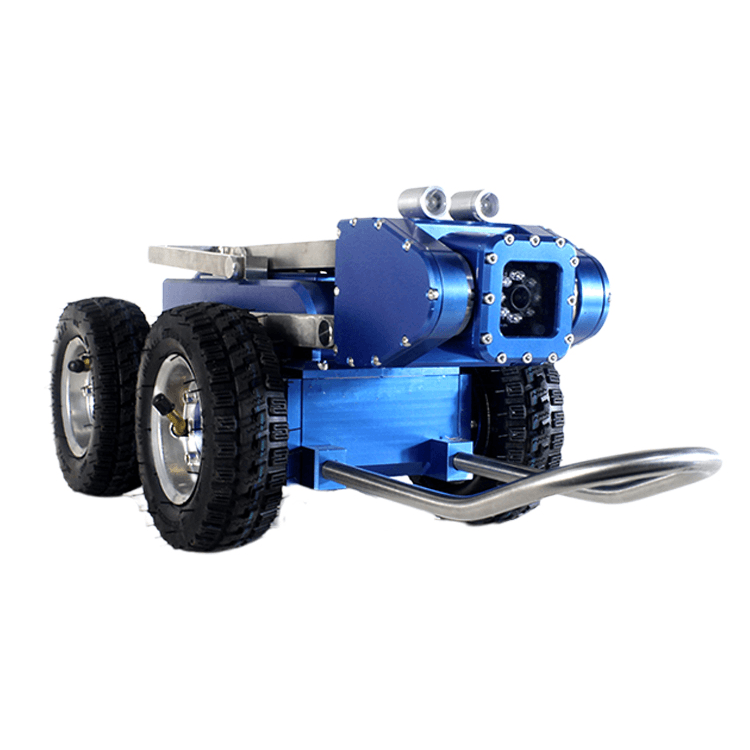
In suitable conditions — typically drainable, non-pressurised sections with access at a valve chamber or similar point — a K-Series crawler is lowered into the line and driven through while cameras record continuously. The operator works from the surface. Because the survey is visual and non-destructive, the line's condition is documented without excavation and, where geometry allows, without removing the main from service.
What the record captures
The footage gives asset teams a metered picture of conditions that develop silently:
- Internal corrosion and tuberculation — wall loss that never shows at the surface
- Lining condition — blistering, peeling or loss of protective linings
- Sediment and deposits — build-up that reduces capacity and affects water quality
- Joint movement — displacement that signals bedding problems
Every observation is pinned to a metered position, so the record can be compared year over year to show whether the condition is stable or developing.
Where in-service surveys fit
In-service robotic surveys suit mains that can be accessed and surveyed without interrupting supply, where the pipe geometry is navigable and the contents are compatible with the equipment. Not every main qualifies: pressurised sections, certain pipe materials and lines without access points need different approaches. The practical step is to assess the specific section — access, pressure, contents and geometry — before planning a survey. In suitable pipe geometries, the approach can reduce or avoid entry compared with manual inspection, and it removes excavation from the condition-checking part of the job.
The workflow
- Assess access. Identify valve chambers or access points and confirm the section is suitable for a robotic survey.
- Deploy. The crawler enters the line at the access point with the control unit at the surface.
- Inspect. The operator drives the run while cameras record the wall with metered distance.
- Report. Corrosion, lining and sediment observations are compiled with positions into a condition record for planning.
Why condition data beats failure data
A main that fails decides its own schedule — and its own budget. A survey lets the utility choose the schedule: rehabilitation can be planned into capital programmes, leaks can be caught before they surface, and maintenance history becomes a documented baseline rather than a memory. For network owners, that is the difference between managing the asset and reacting to it.
"The cheapest repair is the one planned from a condition record — not the one forced by a failure."
FAQ
Can every water main be surveyed in service? Not every one. Access, pressure, contents and geometry all need to be assessed for the specific section first. Where the conditions are suitable, in-service robotic survey removes the shutdown.
Does the survey affect water quality or supply? No. The survey is visual and non-destructive, and in suitable sections the line continues to supply while the robot records.
How does this compare with digging trial holes? A robotic survey is non-destructive and metered — it sees the whole wall over the surveyed length, not a single point, and it does not excavate.
In-service robotic surveys put condition data on the table without the shutdown — and let utilities plan rehabilitation from evidence instead of failure.