

Water Mains & Potable Networks
Condition surveys of potable & utility mains — no shutdown, no supply interruption.
Preventive robotic CCTV surveys of drinking-water and utility mains, carried out in service — no shutdown, no supply interruption, and an objective condition record your capital team can plan on.
Why Water Mains Fail Quietly.
The deterioration is invisible, the shutdowns are costly, and the record is missing.
Corrosion & Lining Loss
Internal corrosion, tuberculation and failed linings develop over years without a single visible symptom. By the time flow or pressure drops, the pipe wall is already compromised.
Shutdowns Cost More Than Repairs
Every hour a main is off supply costs far more than the inspection itself. Utilities need condition data without closing the line or interrupting supply.
No Condition Record
Without a structured survey history, maintenance is driven by failure rather than condition — and budgets are justified on guesswork instead of evidence.
Buried, Hidden, Hard to Reach
Water mains run under roads, river crossings and built-up areas. Digging trial holes to check condition is slow, disruptive and expensive.
The direct answer.
How are water mains inspected without shutdown? For drainable, non-pressurised sections the practical answer is remote robotic CCTV: a tracked crawler enters the line at an access chamber or valve and drives through the pipe while cameras record the internal wall continuously. PipeSolv's K-Series does this in service wherever access geometry allows — no shutdown, no supply interruption and no excavation.
Condition that fails quietly
Water mains rarely announce their problems. Internal corrosion, tuberculation and lining loss develop below grade, invisible until flow, pressure or water quality changes. A robotic survey surfaces that condition early — capturing lining state, joint movement, deposits and early corrosion with enough clarity to separate routine ageing from developing faults.
A record your capital team can plan on
Every run produces continuous video, defect screenshots and a structured report with metered positions. Because each survey is repeatable, utilities can compare condition year over year, justify maintenance budgets with evidence, and move rehabilitation from reactive to planned — before a failure decides the schedule.
In Service, On Record.
The K-Series inside the mains network — lining, joints and corrosion captured without a single hour of lost supply.
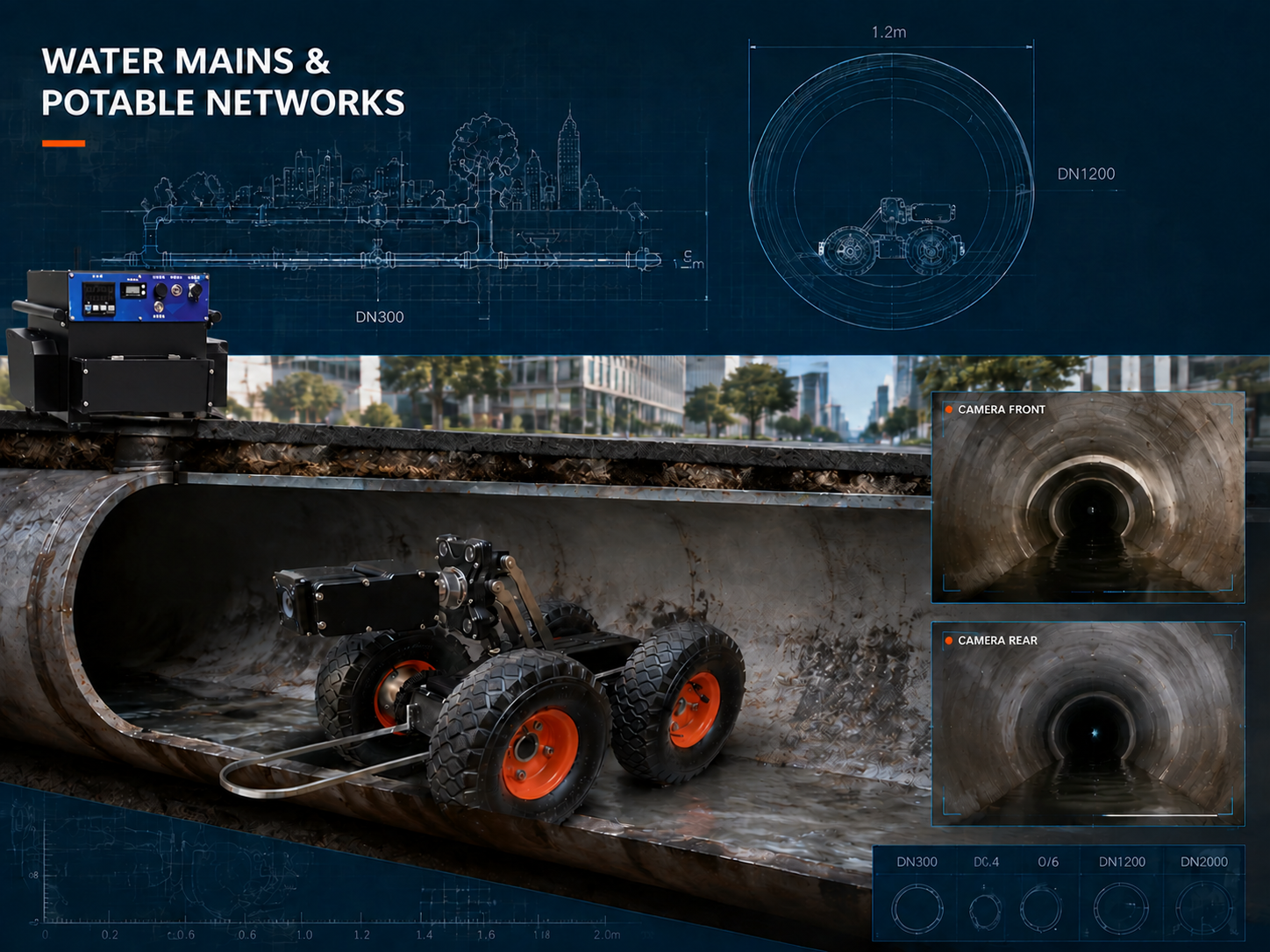
Pressure Mains, No Shutdown
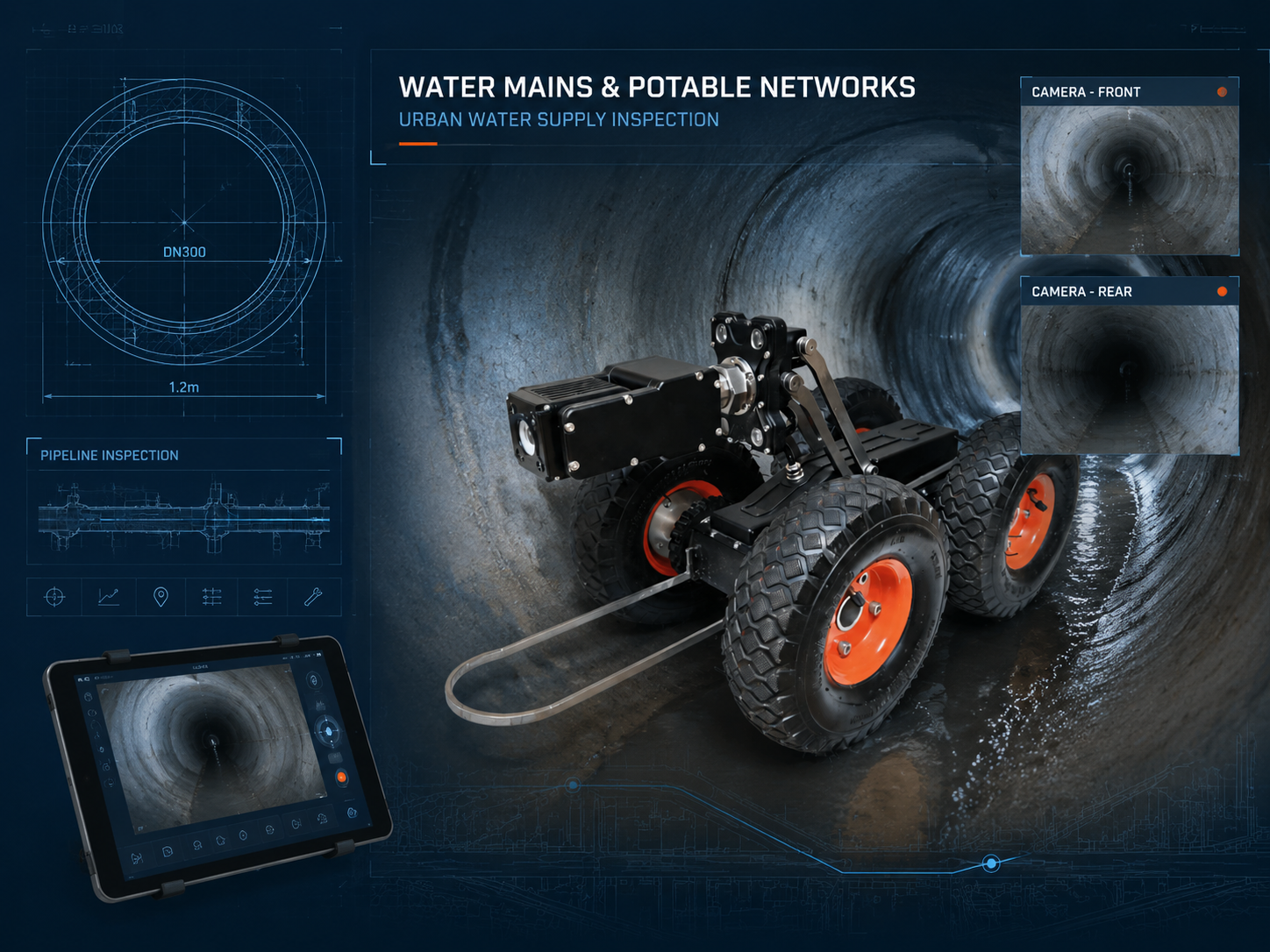
Corrosion & Lining Survey
The K-Series Surveys It In Service.
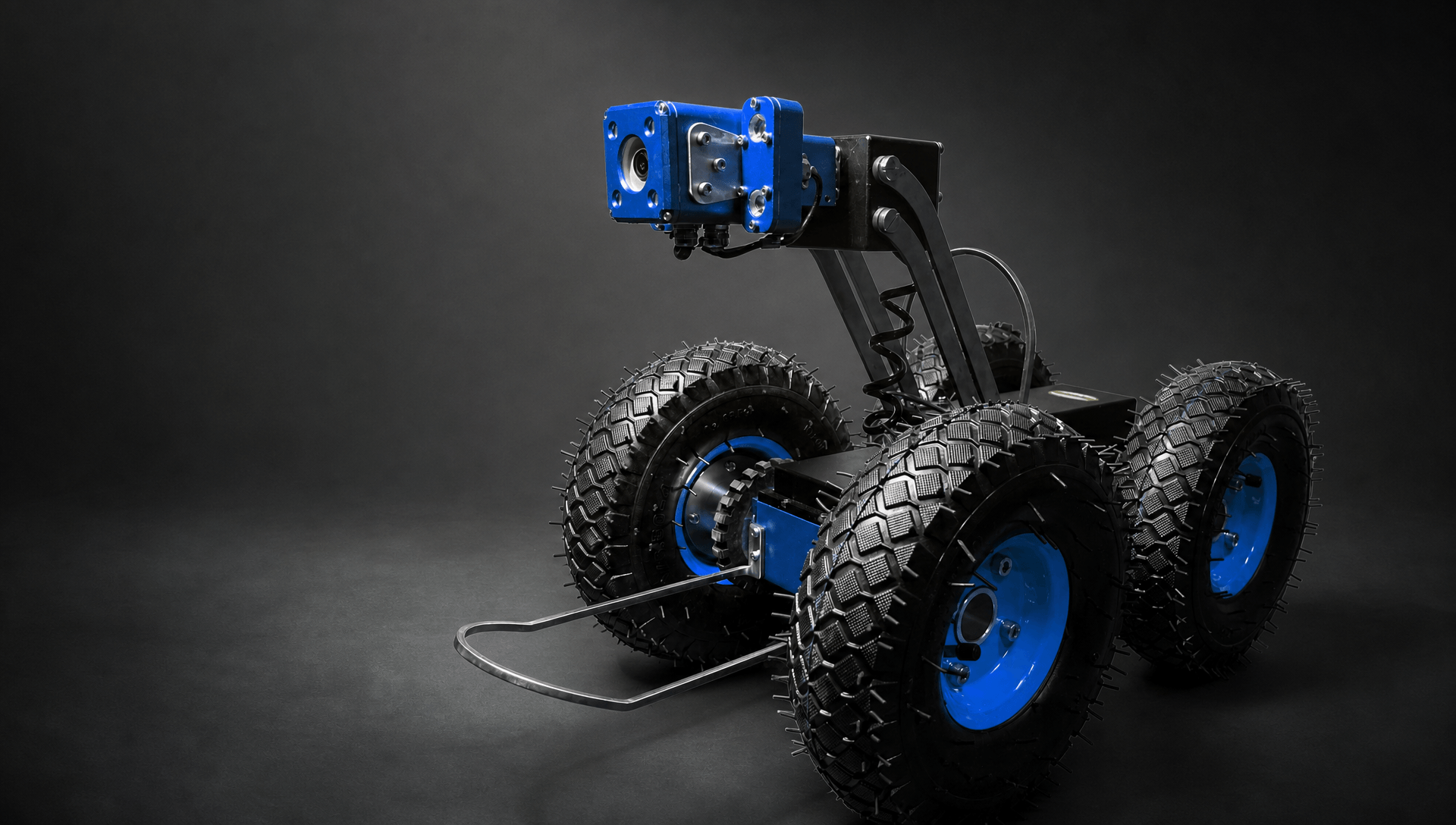
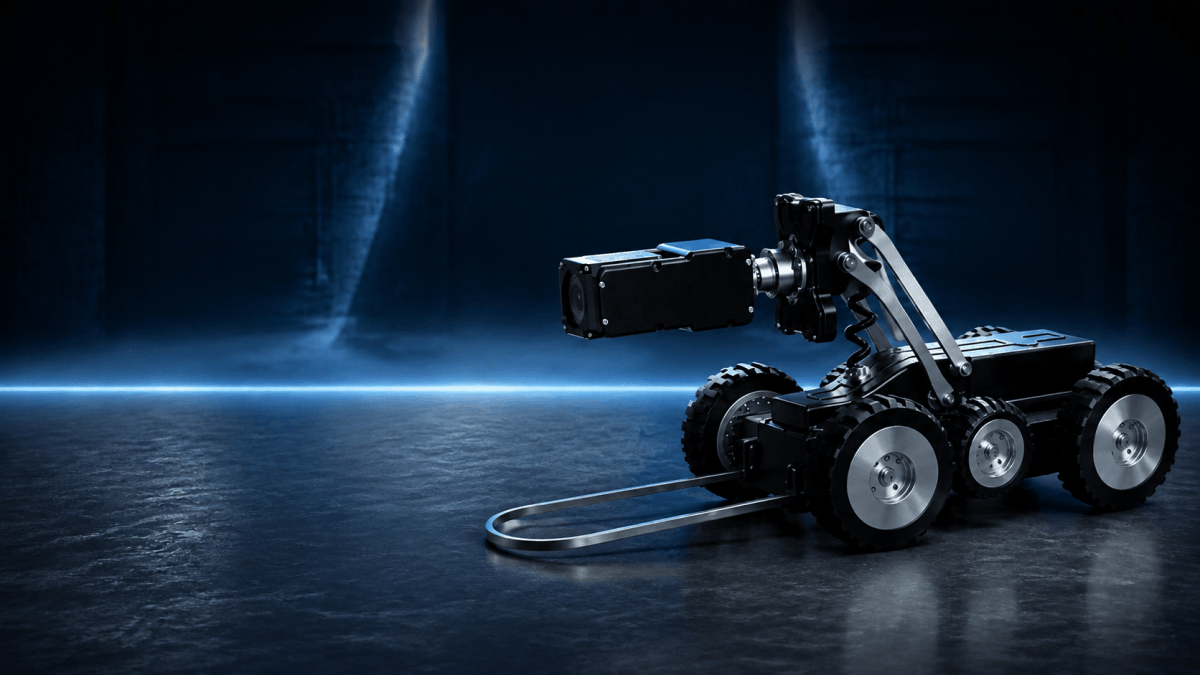
The K-Series is lowered into the network at a valve chamber or access point and driven through the line while it remains in service wherever geometry allows. Twin HD cameras capture the full wall — lining condition, joint movement, corrosion and deposits — while the electronic encoder pins every observation to a metered position. The result is a dated, objective condition record that asset teams can compare year over year.
Built for the Mains Network.
Condition data without closing the line — repeatable, metered, evidence-backed.
In-Service Survey
No shutdown, no supply interruption — the line keeps running while the survey is recorded.
Lining & Corrosion Visibility
HD footage captures lining loss, tuberculation and early corrosion long before they become failures.
Metered Condition Record
Every observation is pinned to a metered position, so surveys are repeatable and comparable over time.
Full Circumference Coverage
Twin cameras cover the entire pipe wall, including the crown where corrosion often starts first.
Objective Reporting
Structured screenshots and reports give maintenance teams evidence they can act on — and justify.
From Access Point to Report in Four Steps.
A proven process that turns a mains survey into a routine remote operation.
Plan
Confirm the section, identify valve or access points, and agree the survey scope with the asset owner.
Deploy
Place the robot in the line at the access point and connect the control system at the surface.
Inspect
Drive the run while cameras record the full wall with metered distance — supply stays online.
Document
Flag lining, corrosion and joint observations, capture evidence and export the structured report.
Machines Built for This Work.
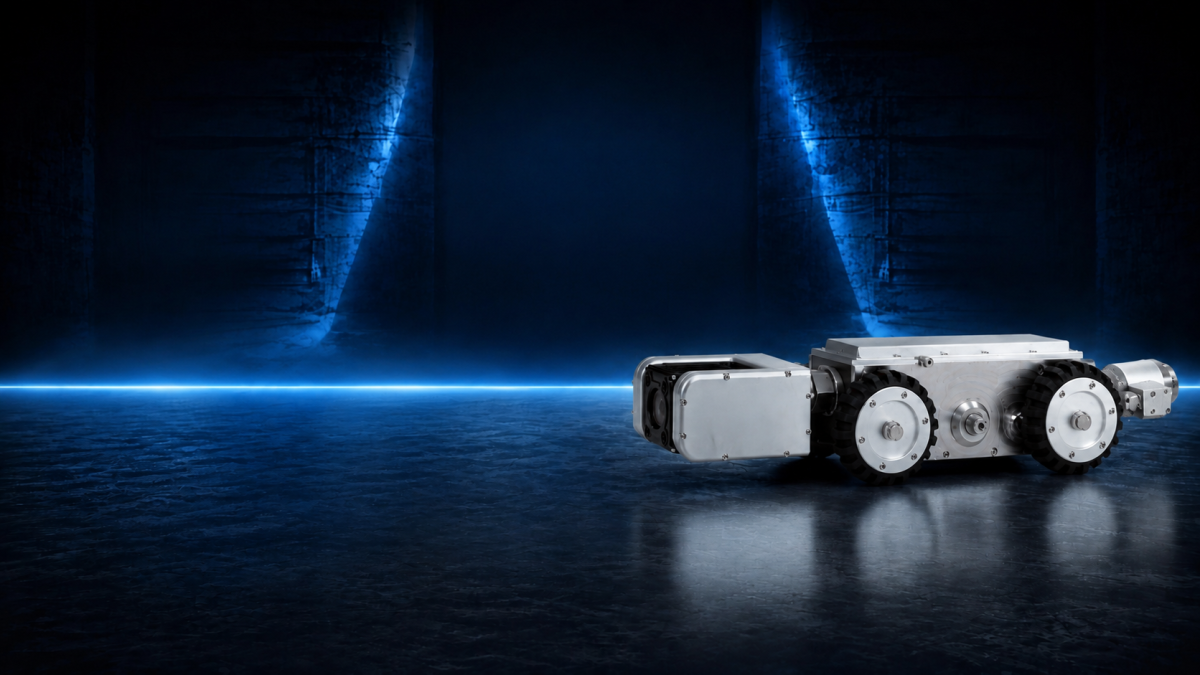
The K-Series models recommended for this application — pick your platform to see the full specification.
Explore Other Industries.
Utility Ducts & Cable Tunnels
Condition mapping of cable ducts and utility tunnels — remotely.
Stormwater & Flood Relief
Pre-flood condition surveys of stormwater and flood-relief systems.
Long-Run Trunks & Culverts
Single-pass inspection of long trunk mains, culverts & tunnels.