

Long-Run Trunks & Culverts
Single-pass inspection of long trunk mains, culverts & tunnels.
Long-range, single-pass robotic surveys of trunk mains, culverts and tunnels — coverage where standard camera cable limits fall short, with metered defect mapping end to end.
Why Long Runs Break the Routine.
Cable limits, repeated setups and fragmentary records turn long assets into an inspection puzzle.
Cable Limits
Standard inspection setups run out of cable before the survey does. Long trunk mains and culverts need multiple re-sets, each costing hours of setup and retrieval.
Repeated Setups
Relay points mean repeated access, repeated traffic control and repeated risk — plus gaps where consecutive runs don't line up cleanly.
Deep, Low-Access Locations
Trunk mains sit deep under roads and river crossings. Every setup is a confined-space operation with its own permits and rescue plan.
Fragmentary Records
Multi-setup surveys produce fragmented video with no single metered picture of the full run, so condition is judged in slices rather than end to end.
The direct answer.
How do you inspect a trunk main that runs further than the cable? You choose a system built for long-range single-pass work. PipeSolv's K-Series drives the full run from one access point with a single cable reel and continuous metered recording — so long trunk mains, culverts and tunnels are covered end to end without relay re-sets.
One pass beats five re-sets
Every relay point on a conventional survey costs setup time, traffic control and crew exposure — and each join in the record creates a gap where condition data goes missing. A single-pass survey removes the joins: one continuous video file, one metered distance chain, one report that represents the asset as it actually is.
End to end, not in slices
When the full run is captured in one continuous record, condition is compared along the line rather than slice by slice. Structural movement, joint displacement and sediment patterns become visible as trends across the whole asset — exactly what an owner needs to prioritise rehabilitation spending.
One Run, End to End.
Trunk mains and culverts mapped in a single pass — no relay points, no re-sets, one continuous record.
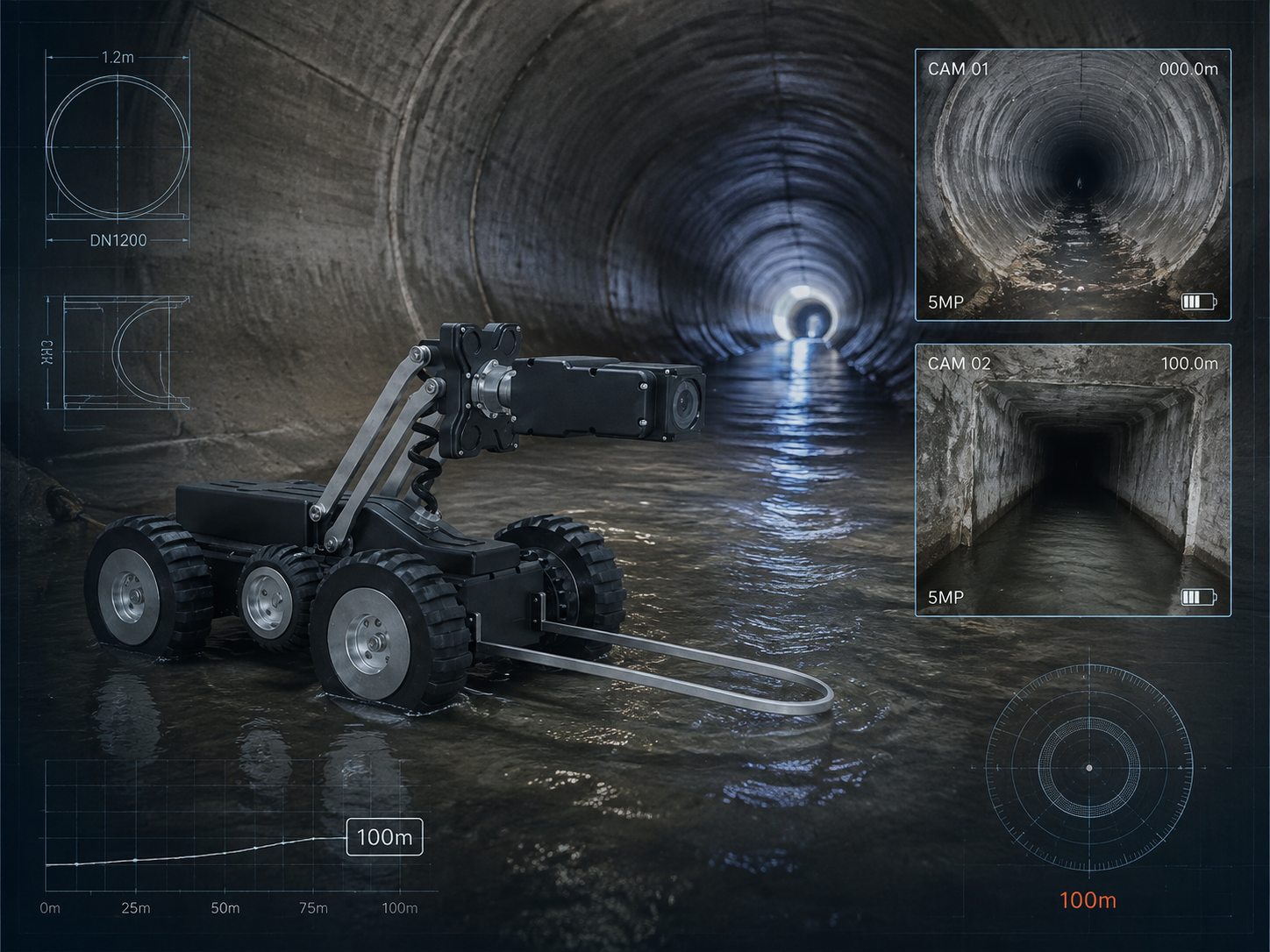
Trunk Mains in One Run
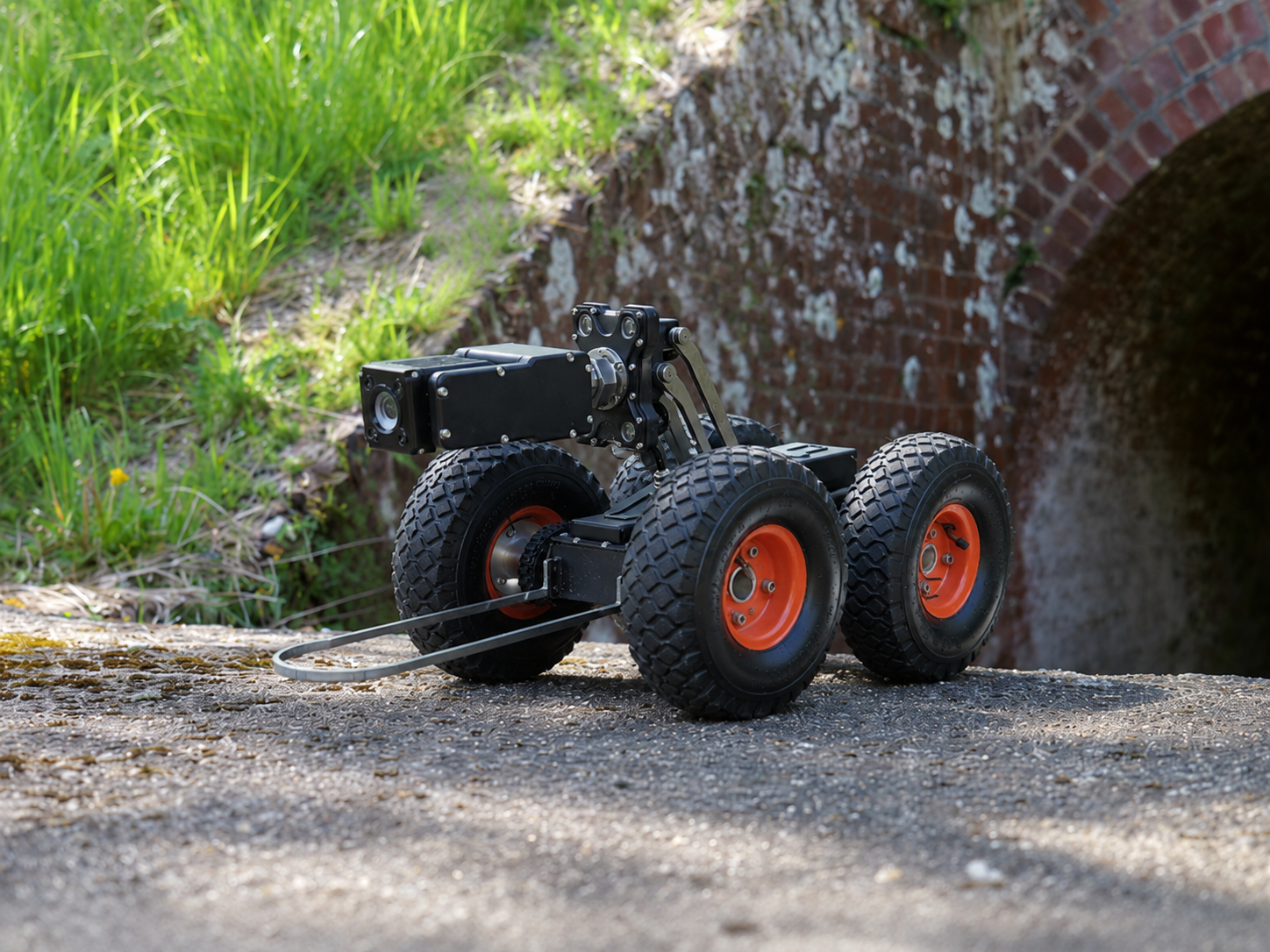
No Relay, No Gaps
One Pass. One Continuous Record.
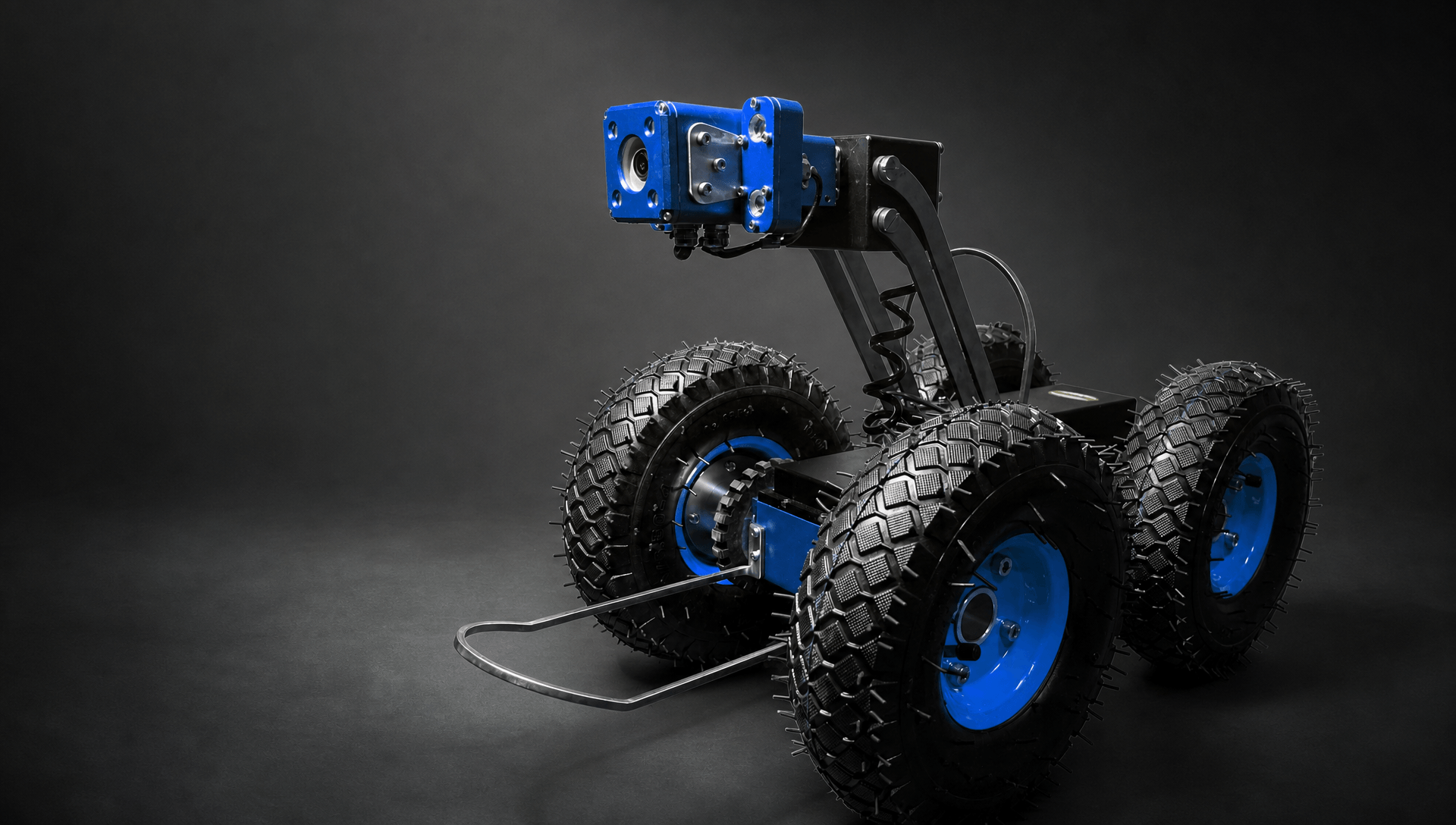
The K-Series is built for long-range operation: a single operator with one cable reel drives the crawler through the full run while twin HD cameras and the electronic encoder record continuously. The result is one continuous, metered video record from access point to access point — no relay gaps, no re-sets, and a single report that gives the asset owner the complete picture in one pass.
Built for the Long Run.
Single-pass coverage with metered end-to-end records — no gaps, no re-sets.
Single-Pass Coverage
Long trunk mains and culverts are covered in one pass, without relay points or cable re-sets.
One Continuous Record
Continuous metered footage from end to end — no gaps where consecutive runs fail to line up.
Deep Access
Designed for trunk mains and culverts buried deep under roads, rivers and built-up areas.
Metered End-to-End
The electronic encoder builds one metered condition map across the full run.
Fewer Setups
One operator, one reel and fewer access operations mean less traffic control and less risk per kilometre.
From Access Point to Full Run in Four Steps.
A proven process built around long-range, single-pass operation.
Plan
Mark the access points and agree the full run length with the asset owner before mobilising.
Deploy
Lower the robot at the start access point and connect the control system at the surface.
Inspect
Drive the full run in one pass while cameras and the encoder record continuously.
Document
Flag defects on the live view and export one structured report covering the whole run.
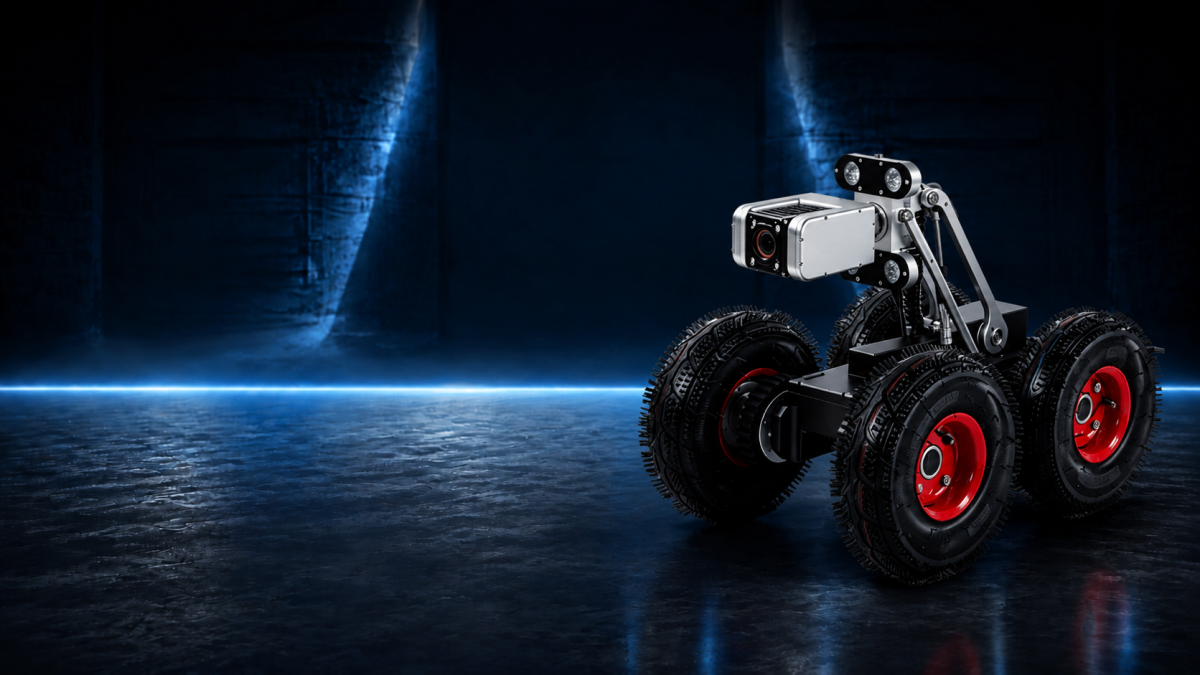
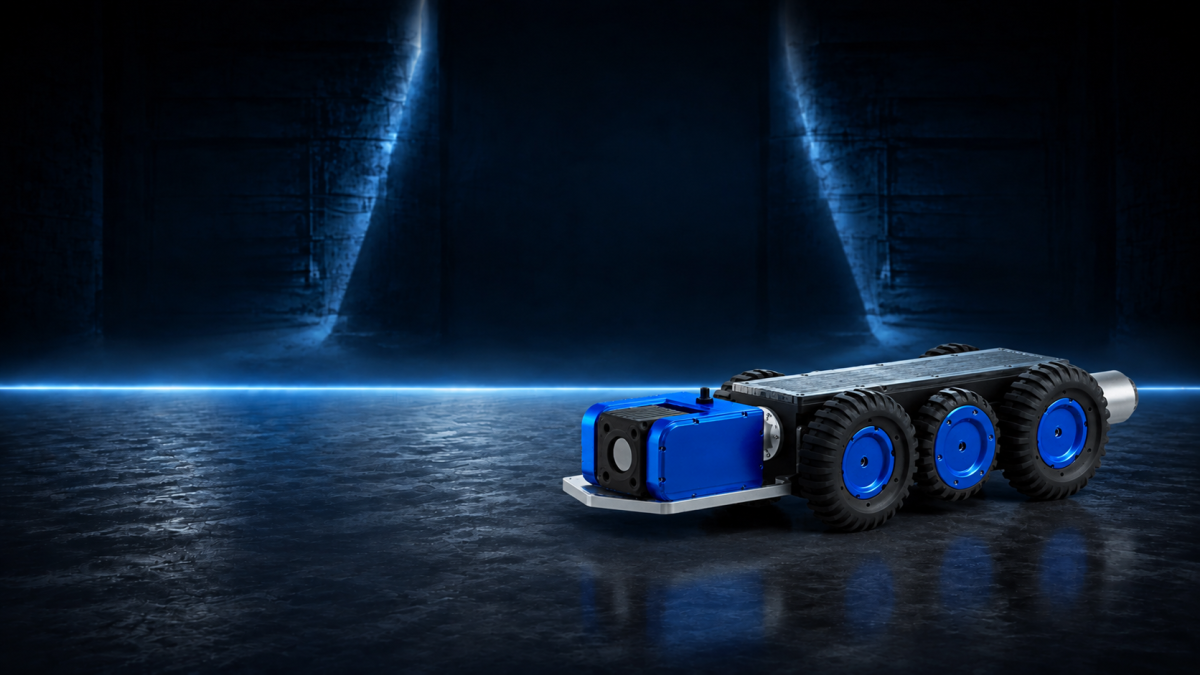
Machines Built for This Work.
The K-Series models recommended for this application — pick your platform to see the full specification.
Explore Other Industries.
Utility Ducts & Cable Tunnels
Condition mapping of cable ducts and utility tunnels — remotely.
Stormwater & Flood Relief
Pre-flood condition surveys of stormwater and flood-relief systems.
Industrial Process Piping
In-service surveys of plant piping — no shutdown, no confined-space entry.