

Industrial Process Piping
In-service surveys of plant piping — no shutdown, no confined-space entry.
Robotic condition assessment of process and plant piping between maintenance windows — no shutdown, no confined-space entry, and a permanent video record of every line surveyed.
Why Plant Piping Goes Uninspected.
Shutdowns are expensive, entry is risky, and the internal condition stays invisible.
Forced Shutdowns
Conventional internal inspection often means isolating the line and taking it out of service. For continuous-process plants, that cost can exceed the inspection by a wide margin.
Confined-Space Exposure
Accessing process piping means working in confined spaces with gas risk and entry permits. Each entry exposes crew to risk and slows the survey.
Hidden Internal Condition
Corrosion, scale, joint movement and debris accumulate inside process lines with no external sign — until a leak or a blockage stops production.
Reactive Maintenance
Without routine internal surveys, maintenance windows are spent reacting to failures instead of planning around known condition.
The direct answer.
Can industrial process piping be inspected without shutdown? In many plants, yes — with a tracked robotic crawler that enters the line at a spool, flange or inspection port and surveys the internal wall while the operator stays outside. PipeSolv's K-Series records continuous HD footage with metered positions, giving maintenance teams a documented picture of corrosion, scale and joint condition between outages.
The cost of "we'll catch it later"
Process piping accumulates scale, corrosion and debris with no external warning. The first sign is often a leak, a restriction or a product-quality issue — all of them more expensive than a survey. Robotic internal inspection surfaces that condition early, so repairs are planned around the maintenance calendar instead of the failure event.
Surveys that fit the maintenance window
A robotic survey turns a confined-space, shutdown-dependent job into a routine remote operation: a crawler, a reel and one operator at the access point. Line contents and atmosphere must be assessed for compatibility case by case, and where the environment falls outside the robot's operating envelope, engineering review comes first.
Between Outages, On Record.
The K-Series inside plant piping — process lines surveyed without shutdown or confined-space entry.
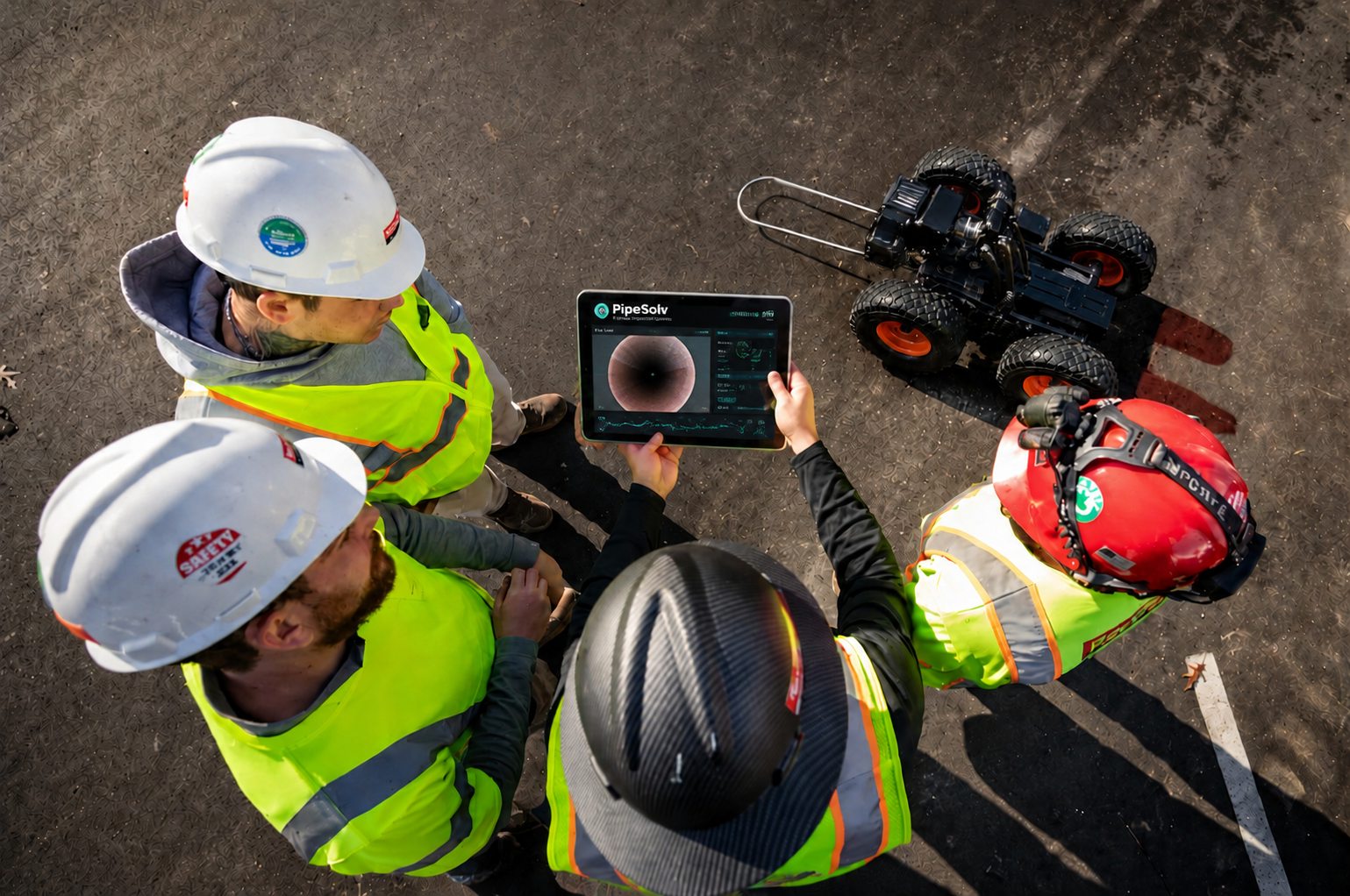
In-Service Piping Survey
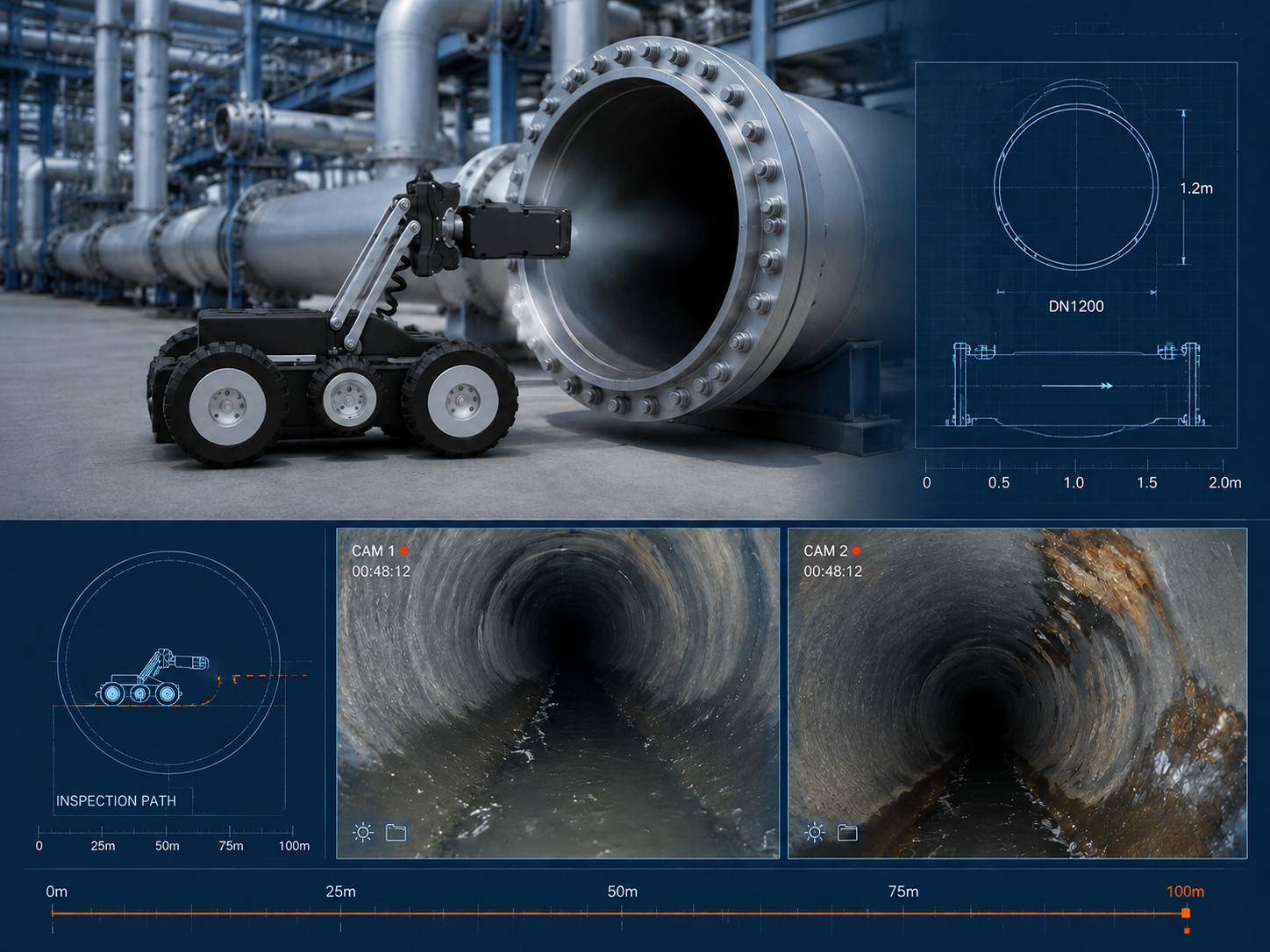
Plant Access Without Entry
The K-Series Inspects It In Service.
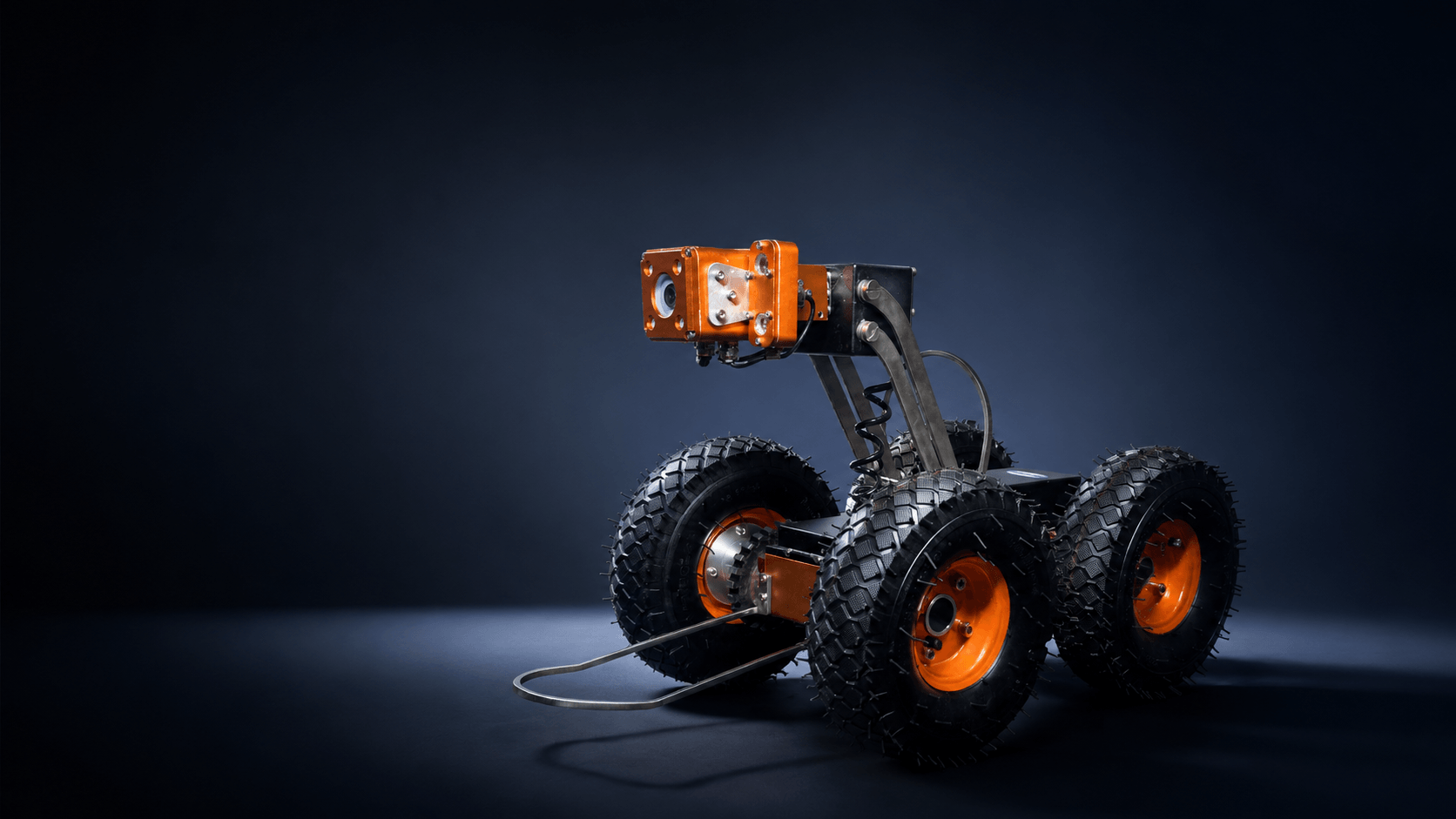
The K-Series crawler enters the process line at an accessible spool, flange or inspection port and is driven through the run while cameras record the internal wall continuously. The operator stays outside the line — no entry permits, no gas monitoring inside the pipe. HD footage with metered distance gives the maintenance team a documented picture of corrosion, scale and joint condition they can compare between outages. For any line, chemical compatibility of contents and atmosphere must be assessed case by case before a survey.
Built for the Plant Floor.
In-service surveys with documented, metered records — no shutdown, no entry.
No Shutdown
Surveys happen between maintenance windows while the line remains in service.
No Entry
Operators stay outside the pipe; routine visual surveys need no confined-space entry.
Full Wall Coverage
Twin HD cameras record the entire internal circumference, including crowns and inverts that stay hidden from the outside.
Metered Location
The encoder pins every observation to a position, so repairs are planned precisely, not guessed.
Baseline Records
Repeat surveys build a condition history that drives predictive maintenance between outages.
From Access Port to Report in Four Steps.
A proven process that fits the maintenance window, not the other way round.
Plan
Identify the line, confirm process and access conditions, and agree the survey scope with plant engineering.
Deploy
Enter the line through a spool, flange or inspection port and connect the control system at the access point.
Inspect
Drive the run while cameras record corrosion, scale, joints and debris with metered positions.
Document
Flag observations on the live view and export the structured report into the maintenance system.
Machines Built for This Work.
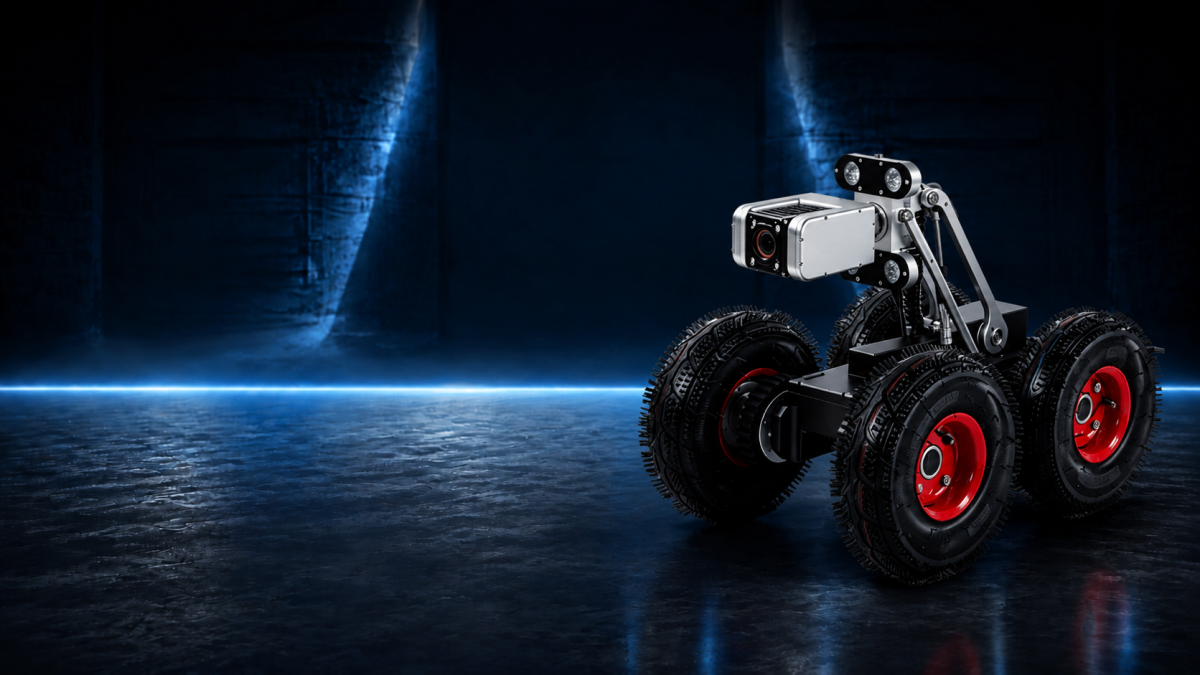
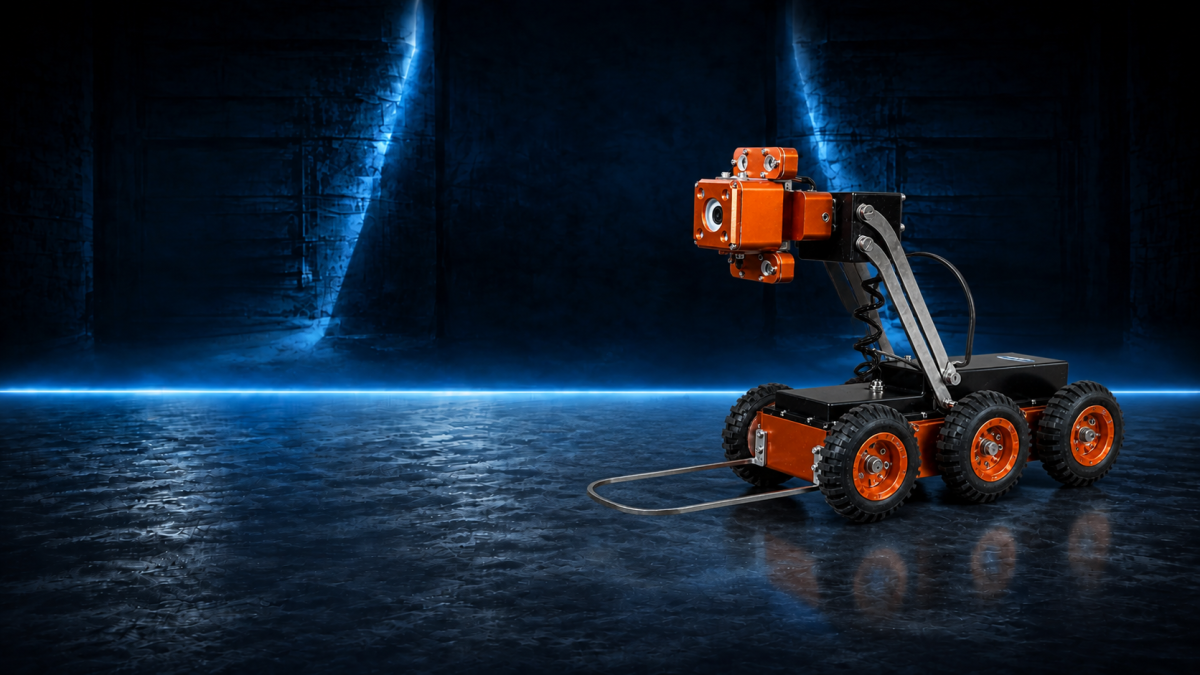
The K-Series models recommended for this application — pick your platform to see the full specification.
Explore Other Industries.
Utility Ducts & Cable Tunnels
Condition mapping of cable ducts and utility tunnels — remotely.
Stormwater & Flood Relief
Pre-flood condition surveys of stormwater and flood-relief systems.
Long-Run Trunks & Culverts
Single-pass inspection of long trunk mains, culverts & tunnels.